The jump from home or daycare to a kindergarten classroom is a big change for any family. But children who spend their early years in a high-quality early childhood education program arrive on that first day with a head start that matters far beyond the fall they walk through the school doors.
Key Takeaways
- High-quality early childhood education gives children a strong foundation in social, emotional, and academic skills they will rely on from the first day of kindergarten and throughout their child’s life.
- Play-based early learning, daily routines, and guided practice with self help skills like dressing, handwashing, and following directions make the transition to a structured classroom much smoother.
- At Mary Margaret Daycare and Learning Center, our programs for infants through preschoolers are designed to support kindergarten readiness while keeping learning fun and developmentally appropriate.
- Partnering closely with families through communication, routines at home, and school visits helps children feel safe, confident, and excited about starting kindergarten.
How Early Childhood Education Builds a Strong Foundation for Kindergarten
Early childhood education covers the critical time from birth through age five, when brain connections grow faster than at any other point in a child’s life. According to the American Academy of Pediatrics, these early experiences deeply influence learning, behavior, and health for years to come.
High-quality programs introduce literacy, math, science, and critical thinking through play rather than formal desk work. A child might explore patterns with blocks, count during snack, or hear a story and talk about what happens next. Research shows pre-K attendees score nearly half a standard deviation higher on readiness measures than peers without that early exposure.
Consistent routines like circle time, cleanup songs, and transition cues mirror kindergarten structure and help kids learn what to expect. Group learning experiences – listening to a teacher, raising hands, participating in group discussions, directly prepare children for what they will be asked to do in a kindergarten classroom in the St. Louis area and beyond. These environments blend nurturing care with structured learning so children build curiosity, confidence, and resilience before the academic demands begin.
Developing Social and Emotional Skills for the Classroom
Kindergarten success depends as much on emotional skills as on letters and numbers. Early childhood classrooms play a crucial role in nurturing these abilities from ages two through five.
- Sharing and cooperation: Daily interactions teach children to take turns, solve conflicts with words, show empathy, and make new friends, skills essential on the playground and during group work.
- Naming emotions: Teachers help children recognize feelings like “frustrated,” “excited,” or “nervous” and practice calming strategies such as deep breaths or visiting a quiet corner.
- Predictable routines: Secure relationships with caregivers and consistent schedules build trust, self-control, and emotional resilience, making drop-off and new classmates in kindergarten less stressful.
A typical activity might include a morning feelings chart where children sit and point to their emotion, or role-playing how to join a game on the playground. At Mary Margaret Daycare and Learning Center, our nurturing, small-group environments across the St. Louis metropolitan area prioritize social and emotional growth as part of whole-child development.
Building Early Academic and Language Skills
Early childhood education gently introduces academic concepts through engaging play and everyday routines, not pressure-filled lessons. The importance of this approach is that children begin to love learning before they even realize they are students.
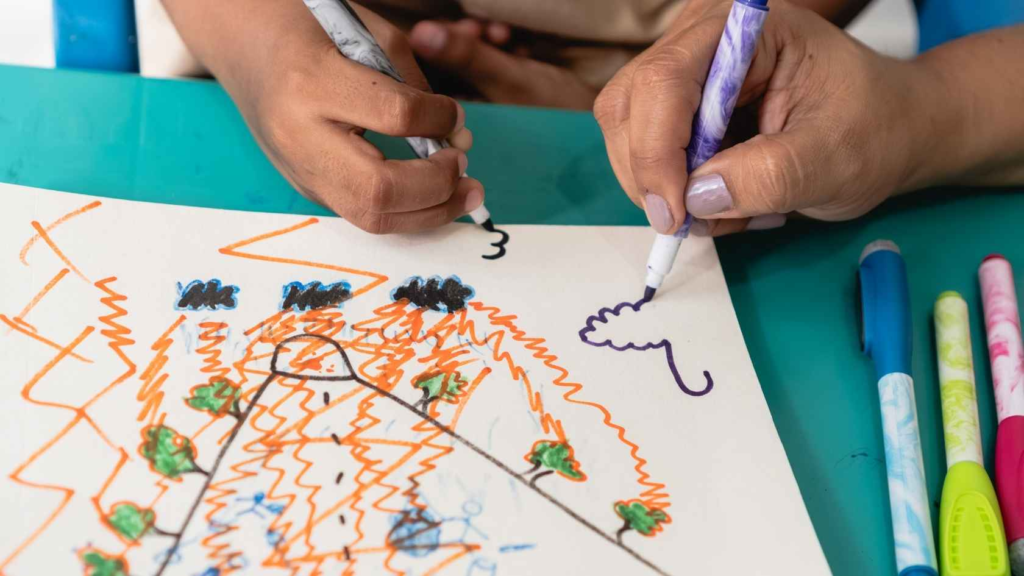
- Early literacy: Recognizing their name in print, watching a teacher read left to right, experimenting with scribbles and letter-like shapes, and expanding vocabulary through songs and conversations.
- Early math: Counting snack pieces, sorting toys by color, recognizing shapes, and using comparative words like “more” and “less” – all of which support kindergarten math standards.
- Language development: Frequent back-and-forth conversations with teachers and peers strengthen communication skills, helping children follow multistep directions, ask for help, and contribute to classroom discussions.
Research from the Institute of Education Sciences confirms that children from low-income families and dual-language learners earn the largest readiness gains from attending pre-K. In a hands-on activities session at Mary Margaret, a four-year-old class might sort colored beads by pattern, count each group, and learn words like “triangle,” “pattern,” and “next” – all while having fun and feeding their creativity.
Practicing Independence and Self Help Skills
Kindergarten teachers expect children to manage many tasks on their own. Early childhood education gives kids time to practice these daily with guidance from grown ups who support them without rushing.
- Self-care tasks: Putting on and taking off clothes, zipping zippers, washing hands, using the bathroom independently, and opening lunch containers.
- Classroom responsibilities: Being the line leader, snack helper, or cleanup captain builds a sense of ownership and mirrors kindergarten jobs.
- Decision-making: Choosing which center to visit, which book to read, or which puzzle to finish strengthens autonomy.
Parents can reinforce these same self help skills at home, plan a “get ready” game each morning, let children carry their own backpacks, and create routines that feel normal and consistent. Research published in the American Journal of Occupational Therapy found that fine motor play activities correlate significantly with school readiness, and fine motor skills underlie many of these everyday tasks. At Mary Margaret, we combine nurturing care with structured routines so children enter kindergarten feeling capable, not overwhelmed.
Getting Comfortable with School Routines and Environments
Early childhood education acts as a bridge between home life and elementary school, helping children adjust to being in a group setting for several hours each day. That transition doesn’t have to happen overnight.
- Core routines: Lining up, moving between activities, sitting for short whole-group lessons, participating in circle time, and using indoor voices in shared spaces.
- Physical environment: Child-sized furniture, labeled cubbies, and defined learning centers help children understand where they belong and create a sense of community.
- Separation practice: Saying goodbye at drop-off, greeting teachers, and reuniting at pick-up – watching this cycle repeat builds security so entering kindergarten feels familiar rather than frightening.
Mary Margaret locations across St. Louis introduce routines similar to local kindergarten programs: scheduled group reading, center time, outdoor play, and quiet rest periods. Children don’t have to know it all before kindergarten. Repeated exposure and gentle support gradually build comfort and confidence over the course of each week.
Partnering with Families to Support Kindergarten Readiness
Parents and caregivers are a child’s first and most important teachers. The strongest kindergarten preparation happens when families and early childhood programs work together, and every board member of a child’s support team, from teachers to family, has a critical role to play.
- Communication: Daily notes, quick conversations at pick-up, and parent conferences help everyone focus on readiness goals and a child’s growth.
- At-home reinforcement: Read together every night, practice writing their name, play counting games, and talk about emotions after a busy day. These simple habits contribute to lifelong learning.
- Touring and visiting: Walking through the classroom before enrollment lowers anxiety for both children and parents. Hope replaces worry when families see where their child will learn and play.
Mary Margaret Daycare and Learning Center offers programs for children from six weeks to twelve years across nine St. Louis metropolitan locations, making it easier for families to find a long-term partner in their child’s growth. We encourage parents to schedule a tour and ask specific questions about kindergarten readiness and daily learning activities.
Choosing an Early Childhood Program to Prepare for Kindergarten
Not all early childhood programs are the same. When putting together your shortlist, look for key quality indicators that truly support kindergarten readiness.
- Staff and safety: Low child-to-teacher ratios, qualified educators, clean facilities, and clear safety procedures.
- Instructional approach: A balance of play-based and structured learning that supports social-emotional growth alongside early literacy and math.
- Continuity: Centers like Mary Margaret that offer infant, toddler, preschool, and before-and-after school care let children stay in a familiar, trusted environment through every stage.
Questions to ask on a tour:
- What does a typical day look like for a four-year-old?
- How do you help children build independence?
- How do you communicate with families about progress toward kindergarten readiness?
Choosing a nurturing, developmentally appropriate program is one of the most essential steps families can take to help their child start school with confidence. It is an investment in every area of their child’s life – academic, social, and emotional – that continues to matter well into the early years of elementary school and beyond.
Frequently Asked Questions
Below are answers to common parent questions about early childhood education and kindergarten readiness that expand on what we covered above.
When should my child start in an early childhood education program?
Many families begin with part-time care around ages two or three, but programs like Mary Margaret accept children as young as six weeks. Consistent participation during the year before kindergarten, typically age four, offers the strongest benefits for social, emotional, and academic readiness. You don’t have to wait until preschool to begin.
How do I know if my child is “ready” for kindergarten?
Readiness looks like being able to follow simple directions, explain needs with words, play alongside other children, show curiosity, and handle basic self help skills with some independence. Children develop at different rates, and that is completely normal. Teachers can help you understand your child’s strengths and areas to keep nurturing.
What if my child is shy or anxious about new situations?
Shyness is common and not a problem by itself. Quality classrooms use gentle introductions, small groups, and predictable routines to help children warm up at their own pace. At home, you can read books about starting school, visit the classroom together, and create a simple goodbye routine to build security.
Can early childhood education help children with different learning needs?
Quality programs make room for diverse learning styles by using varied activities, hands on activities, music, movement, books, and visual supports. If you have developmental or behavioral concerns, share them with your child’s teachers so they can adapt support strategies and explore the best path forward together.
How can I support what my child learns at Mary Margaret at home?
Keep a calm, predictable routine. Read aloud daily. Let your child practice dressing and packing their own backpack. Talk with them about their day using open-ended questions – “What was the best part?” rather than “Did you have fun?” Stay connected by attending school events and reading teacher updates, and never hesitate to ask for ideas tailored to your child’s interests and developmental stage.