Fall is a great season for preschool crafts due to vibrant colors and textures, and you don’t need fancy supplies or an art degree to make them happen. Whether you’re a parent at the kitchen table or a teacher managing a full classroom, the projects in this guide are designed to be simple, affordable, and genuinely fun for children ages 3 through 5. Kids can create 38 fun fall crafts from this collection alone, and every single one uses materials you probably already have on hand.
At Mary Margaret Daycare and Learning Center, we use similar fall crafts across our nine St. Louis childcare locations to blend education with play during the autumn season. Below, you’ll find everything from sunflower stamping to alphabet pumpkins, plus tips on safety, clean-up, and how to adapt each project for different ages and abilities.
Key Takeaways
Fall crafts for preschoolers deliver real developmental benefits alongside seasonal fun. Here’s what matters most:
- Fine motor skills get a workout. Actions like tearing paper, squeezing glue, and snipping with safety scissors strengthen the small hand muscles children need for writing in kindergarten.
- Language and early literacy grow naturally. Talking about pumpkins, leaves, colors, and textures during crafting builds vocabulary and supports emerging literacy skills.
- Social and emotional learning happens in real time. Sharing paint, taking turns with scissors, and celebrating each other’s creations teach children cooperation and self-confidence.
- Every craft is flexible. These projects work at home, in preschool classrooms, and in before- and after-school care settings throughout September, October, and November.
- Safety comes first. All activities call for close adult supervision, washable paints, non-toxic supplies, and awareness of choking hazards for younger children.
Why Fall Crafts Are Perfect for Preschoolers
Fall crafts support whole-child development across social, emotional, physical, and cognitive domains for children ages 3 through 5. The fall season offers a natural curriculum of changing leaves, harvest themes, and family traditions that give crafts meaning beyond the craft table.
- Fine motor strength. Crafts involving snipping paper leaves, squeezing glue, and peeling stickers build the hand-eye coordination and grip control that are foundational for later writing. Engaging in crafting activities helps children develop fine motor skills they will rely on throughout school.
- Language and early literacy. When children talk about apples, leaves, colors, and weather while crafting, they expand vocabulary and build concept knowledge. Research shows that pairing crafts with storybooks strengthens narrative skills and print awareness.
- Social skills practice. In a childcare or preschool setting, fall crafts require sharing materials, taking turns, and following simple directions. These are the building blocks of social emotional learning that carry into every part of the day.
- Seasonal awareness. Themes like harvest, changing leaves, and family traditions around Halloween and Thanksgiving help children build a sense of seasons and time, connecting them to the natural world outside their window.
- Integrated learning at Mary Margaret. Our child care classrooms plan fall crafts alongside circle time, storybooks, and outdoor play. This balanced approach supports a child’s growth across every domain while keeping the day so much fun.
Getting Started: Fall Craft Basics for Childcare and Home
Before diving into specific projects, set yourself up for success with a well-stocked supply bin and a few smart routines.
- Core supplies for a fall crafting bin: Washable tempera paint, crayons, markers, glue sticks, safety scissors, construction paper, paper plates, coffee filters, tissue paper, cotton balls, yarn, and recyclables like paper towel rolls and cereal boxes. A roll of brown paper makes a great table cover that doubles as a collaborative drawing surface.
- Nature items to collect. In September and October around St. Louis, you’ll find oak and maple leaves, acorns, small sticks, pinecones, and seed pods. Take little learners on a short walk around the playground to gather materials. Nature walks can supply materials for preschool craft projects and add an outdoor learning component to the day.
- Safety tips. Pre-cut small pieces when needed, avoid sharp sticks, supervise closely with beads and seeds, and use non-toxic paints and glue labeled “conforms to ASTM D-4236.” Keep hot glue guns stored out of children’s reach and reserved for adult use only.
- Classroom and home setup. Cover tables with butcher paper or plastic, use trays for each child to contain mess, have a hand-washing station ready, and label names on artwork immediately. These routines make clean-up faster and prevent mix-ups.
- Process over perfection. Simple projects should allow for personal expression rather than identical results. Let children choose colors, place leaves, and design faces however they want. The learning lives in the doing, not in matching a sample.
September Sunflower Crafts for a Late-Summer to Fall Transition
Sunflowers bridge late summer and early fall, and their big, bright shape is perfect for preschool art projects. Kids love working with sunflower crafts because the bold yellow petals are easy to create and hard to mess up.
- Fork-Painted Sunflower. Give each child a plastic fork, yellow paint, and a circle of brown paper. They dip the fork in paint, stamp petals around the brown center, then draw or glue real sunflower seeds in the middle. This craft builds grip strength and introduces the concept of radial patterns.
- Noodle Sunflower. Pre-dye large pasta noodles yellow and let children glue them around a brown circle for a textured variation. Use strong liquid glue for this one and supervise closely. Toilet paper rolls can be transformed into sunflowers too-cut strips from the roll, fan them out, paint them yellow, and attach them around a center circle.
- Classroom décor ideas. Turn finished sunflowers into a bulletin board border, a window display, or a “Sunflowers Over St. Louis” mural with simple skyline silhouettes made from black construction paper.
- Learning extensions. Count petals before gluing. Sort pasta by shape before the craft begins. Talk about how sunflowers turn toward the sun, introducing basic science observations.
- Cleanup and storage. Dry finished sunflowers flat on labeled trays. Mount them on sturdy cardstock once dry so they hold up on the wall.
Easy Fall Tree Crafts for Preschoolers
Preschoolers notice when the trees outside start changing color, and these fall crafts let them capture that transformation on paper.
- Fork Printed Fall Tree. The teacher draws or prints a simple tree trunk on paper. Children use paint-covered forks to stamp leaves in red, orange, yellow, and brown. Fork printed trees use red, orange, yellow, and brown paint to create a layered, textured canopy that looks impressive with minimal effort.
- Fingerprint Fall Tree. Each child presses fingertips into fall-colored paint and dots leaves onto a tree shape. Crafts like handprint trees use children’s hands to create art, and these keepsake pieces make wonderful parent gifts or additions to progress portfolios.
- Torn Paper Fall Tree. Children tear small pieces of red, orange, and yellow construction paper and glue them onto a trunk outline. This builds finger strength and is one of the simplest crafts for three-year-olds who aren’t ready for scissors yet.
- Display ideas. Line a hallway with “Our Fall Forest” featuring each child’s tree and their name. It creates a sense of community and gives children pride in seeing their work on the wall.
- Curriculum links. Use this fall craft while reading books like Leaf Man or Red Leaf, Yellow Leaf and discussing how seasons change. Collect leaves to make prints around a tree trunk in the book illustrations, then try it on paper.
Leaf Exploration: Nature Walk to Craft Table
Taking preschoolers outside to explore fall leaves and then turning those finds into crafts bridges science observation with creative expression.
- Planning a leaf hunt. In a childcare setting, keep the walk short and supervised. Set clear safety rules: stay with the teacher, look but don’t pick from private yards, and watch for insects. A five-minute loop around the playground usually provides plenty of materials.
- Leaf Rubbing. Place leaves vein-side up under thin paper, then rub crayons over the top. Leaf rubbings reveal shapes and veins through crayon patterns, building both science vocabulary and observation skills. Introduce words like “crunchy,” “smooth,” “veins,” “stem,” and “color change” during the activity.
- Leaf Printing. Paint one side of a leaf and press it onto paper. Emphasize pressing gently and peeling slowly for the clearest print. This craft teaches cause and effect while producing colorful results.
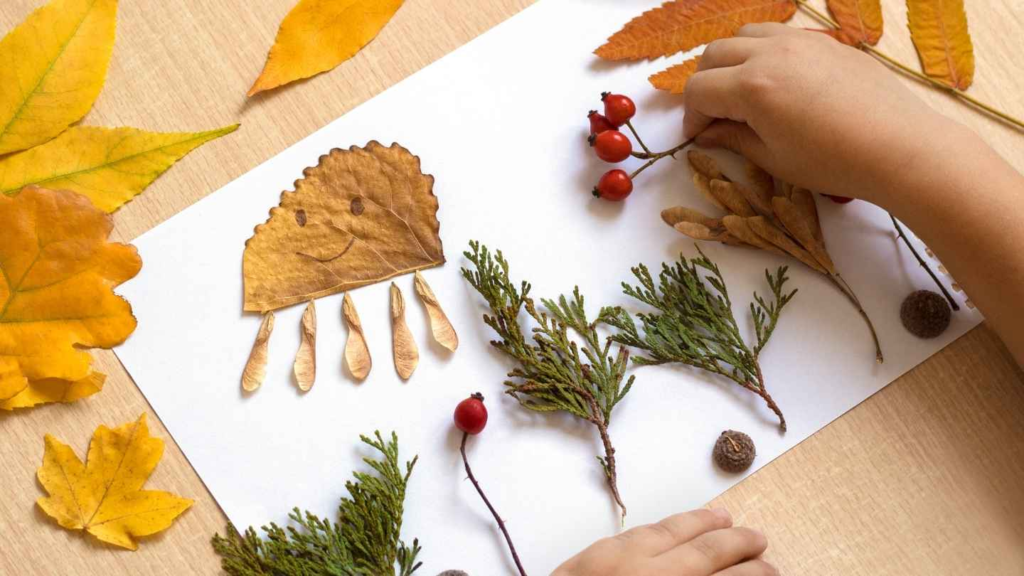
- Leaf Hedgehog. Draw a hedgehog body outline and let children glue leaves as spikes along the back. It’s easy cutting practice for preschoolers. Kids can also paint leaves and turn them into animal faces, like owls or foxes, by adding details with markers.
- Vocabulary building. Leaf exploration is a natural place to introduce descriptive language. Ask children to describe what they feel, see, and smell. These conversations support the early literacy benefits that research connects to craft-based activities.
Coffee Filter Fall Crafts (Leaves, Apples, and More)
Coffee filters are a budget-friendly material perfect for easy fall crafts for kids in childcare centers. They absorb color beautifully and create a watercolor effect children find fascinating.
- Coffee Filter Leaves. Children scribble with markers on a flat coffee filter, then an adult sprays lightly with water. Colors blend and spread as the filter dries. Once dry, cut the filter into a leaf shape. Coffee filter leaves are a fun way to create fall decor for the classroom or home. Coffee filters can be used to create colorful leaves with almost no mess.
- Apple Slice Suncatcher. Use red and green coffee filters cut into circles. Children add a scrapbook paper stem and draw seeds in the center with a black marker. Hang these in windows for a cheerful fall display.
- Window display. Tape finished coffee filter leaves or apples to windows with painter’s tape. The light shining through creates a suncatcher effect that brightens the classroom as days get shorter.
- Quick science tie-in. Talk about how water spreads the marker colors. Let children compare a dry filter to a wet one. Ask questions: “What happened to the orange? Where did it go?” This kind of observation builds early science thinking.
- Group management tips. Have extra filters drying on trays while children rotate to another center. This avoids bottlenecks and keeps the rest of the room running smoothly.
Apple-Themed Preschool Crafts and Learning Activities
Apple crafts connect naturally to apple picking season in September and early October, one of the most beloved preschool themes in the fall.
- Apple Tree Name Craft. Draw a tree trunk on paper and add apple shapes along the branches. Each apple bears one letter of a child’s name. Apple tree name craft builds name recognition skills and helps children practice letter order in a hands-on way.
- Apple Stamping. Cut apples in half, dip them in paint, and press onto long butcher paper banners. Apple stamping provides a fun way to create prints using fruit and paint. Let children explore one color at a time or mix shades for layered prints.
- Ripped Paper Apple Plate. Children tear red or green paper into small pieces and glue them onto a paper plate. Add a brown paper stem and a green construction paper leaf. This is ideal for toddlers who are still building tearing skills.
- Math extensions. Try an “Apple Seed Counting” activity with drawn apples and glued beans or paper “seeds” to match written numbers 1 through 10. Apple seed counting puzzles develop number recognition and counting at the same time.
- Taste test pairing. Bring in red, green, and yellow apples for a taste test. Create a simple chart and let children place a sticker next to their favorite. This blends math, science, and social skills into one activity.
Pumpkin Play: No-Carve Pumpkin Crafts for Preschoolers
Pumpkins are a favorite fall craft theme in childcare programs because they work for both Halloween and Thanksgiving. These no-carve options keep things safe and accessible for all ages.
- Paper Plate Pumpkin. Paint or color a paper plate orange. Once dry, glue on pre-cut construction paper shapes for eyes, a nose, a mouth, and a green stem. Children love designing their own faces-some silly, some spooky, some just cute.
- Ripped Paper Pumpkin Collage. Provide a pumpkin outline on paper and a pile of orange paper scraps. Children tear and glue pieces to fill the shape. This is ideal for toddlers and younger preschoolers who benefit from simple, repetitive actions.
- Sticker Pumpkin Faces. Set up a low-mess center with printed pumpkin outlines and sheets of stickers-googly eyes, foam shapes, and dot stickers. Children decorate freely, creating their own pumpkin personalities.
- Puzzle Piece Pumpkin. Pre-paint old puzzle pieces orange and let children glue them onto a pumpkin shape cut from cardboard. It’s a creative way to reuse materials and adds a satisfying three-dimensional texture. Preschool-friendly projects often use recycled or natural materials like this.
- Display ideas. Create a “Pumpkin Patch Wall” with each child’s name written on their pumpkin. Add an optional class photo next to it so families can see the whole group’s work during drop-off.
Friendly Scarecrow Crafts for Little Hands
Scarecrows are a not-too-spooky fall symbol that preschoolers find fun and friendly. They also provide opportunities for creative detail work.
- Brown Bag Scarecrow Puppet. Use a paper lunch bag as the base. Add yarn or paper strips for hair, a small paper hat, and a drawn or glued face. Children can use the puppet for dramatic play afterward, telling stories about gardens and farms.
- Flat Scarecrow Face. On a piece of cardboard or heavy paper, children assemble scarecrow pieces: googly eyes, a triangle nose cut from construction paper, and straw-like paper strips for hair. Kids can make scarecrows using cardboard and scrapbook paper for the hat and clothing details.
- Dramatic play and stories. Use finished scarecrows for circle time stories about caring for gardens and farms in the fall. Ask children what a scarecrow’s job is and what it might see in the field.
- Pattern practice. Decorate scarecrow hats with striped or checkered paper and stickers, giving children a chance to explore patterns and colors. Heading into more detailed projects helps older preschoolers build attention and planning skills.
- Vocabulary integration. Teachers can weave in words like “patch,” “straw,” “field,” and “harvest” during the craft. These words build background knowledge children will encounter in books and classroom discussions throughout the fall season.
Simple Halloween-Themed Fall Crafts (Not Too Spooky)
These Halloween-flavored fall crafts are designed to be friendly and preschool-appropriate for both home and childcare settings. The goal is cheerful, not frightening.
- Cotton Ball Ghosts. Wrap a tissue or piece of white fabric around a cotton ball, tie it with yarn, and draw two eyes with a marker. Simple, fast, and endlessly amusing for three-year-olds. You can create ghosts using leaves and paint as well-paint a large leaf white, let it dry, and add ghost faces with a marker. Kids can create leaf ghosts using painted leaves for a nature-meets-Halloween twist.
- Leaf Ghost Garland. String several leaf ghosts together on yarn to make a garland for the classroom or a child’s room at home. This adds a craft-to-décor connection that helps children see the value of their work.
- Paper Plate Spider Web. Punch holes around the edge of a paper plate (or pre-punch them). Children thread yarn through the holes to create a web pattern, then attach a small paper spider in the center. This is excellent for hand-eye coordination and early threading skills.
- Keep it gentle. Emphasize smiling pumpkins and silly ghosts instead of scary faces. Art projects for preschoolers offer opportunities for imaginative play, and keeping imagery cheerful ensures all children feel comfortable.
- Classroom policy flexibility. Some childcare programs prefer to avoid Halloween imagery altogether. In those cases, use neutral “pumpkins and leaves” wording and skip the ghost projects. The rest of the crafts in this guide cover the season without any spooky elements.
Sensory-Rich Fall Crafts (Texture, Touch, and Tactile Play)
Sensory fall crafts matter because they support brain development and help preschoolers with self-regulation. Crafts using simple and tactile materials work well for preschoolers who learn best through touch.
- Puffy Paint Pumpkin or Leaf. You can make puffy paint with shaving cream and glue-mix equal parts, add a few drops of food coloring, and spread it thickly on paper pumpkin or leaf shapes. The texture dries raised and squishy. Preschool crafts encourage sensory exploration and fine motor practice with projects like this.
- Cotton Ball Apple Tree. Dip cotton balls in red and green paint and press them onto a tree shape drawn on paper. The bumpy, textured result looks like a real apple tree and gives children a different tactile experience from flat painting.
- Nature Collage. Autumn crafts can include creating nature collages with leaves and twigs. Provide cardboard as a base and let children glue on leaves, small sticks, seeds, and other natural items. Encourage them to explore the difference between rough bark, smooth leaves, and bumpy acorn caps.
- Supervising the mess. Set clear rules: smocks on, materials stay on the tray, no tasting. Have a fast cleanup routine ready-damp cloths, a scrap bin, and a drying rack. Cover tables with plastic or paper for quick tear-down.
- Calming transition tool. Use sensory fall crafts as a gentle bridge between outdoor play and indoor learning. The repetitive motions of pressing, smoothing, and patting can help children settle their bodies and focus.
Fine-Motor Focus: Threading, Beading, and Tearing Fall Crafts
Many easy fall crafts for kids double as excellent fine-motor exercises. These activities target the specific hand skills children need for writing, buttoning, and using tools.
- Apple Bead Threading. Provide large red and green beads and chenille stems bent into apple shapes. Children thread beads onto the stems, working on pincer grip and hand-eye coordination. This is a quiet, focused activity that works well in small groups.
- Leaf Lacing Cards. Cut leaf shapes from laminated cardstock and punch holes along the edges. Children sew yarn around the leaf, building bilateral coordination and patience. These can be reused across the week.
- Tearing projects. Ripped paper leaves, pumpkins, and apples build hand strength while keeping steps simple. Simple craft projects involve actions like tearing, stamping, and gluing-all of which strengthen the muscles needed for pencil control.
- Teacher observation tool. During these fall craft activities, teachers can observe grip strength, hand preference, and cutting skills for progress notes. This kind of informal assessment informs teaching without requiring separate testing time.
- Rotating small-group centers. At Mary Margaret child care locations, we rotate threading and lacing activities into small-group centers so each child gets individual support and attention from a teacher.
Literacy-Boosting Fall Crafts (Names, Letters, and Stories)
Fall crafts for preschoolers connect powerfully with early childhood education goals like letter recognition and storytelling when designed with intention.
- Alphabet Pumpkins. Write a letter on each paper pumpkin shape. Children dot paint or place stickers inside matching pumpkins as they hear the letter sounds read aloud. Alphabet pumpkins help kids practice the alphabet creatively and reinforce letter recognition through multisensory learning. Alphabet pumpkins help kids practice letter recognition across repeated sessions.
- Leaf Letter Matching. Write capital letters on paper leaves and lowercase letters on a tree trunk or basket cutout. Children match the leaves to their lowercase partners. This is a hands-on alternative to a worksheet that keeps learning playful.
- Story Sequencing Fall Craft. Create picture cards showing a fall activity sequence-raking leaves, jumping in the pile, bagging them up. Children glue the cards in order on a strip of paper, practicing narrative skills and logical sequencing.
- Pairing with books. Read fall picture books before or during craft time and invite children to retell parts of the story while they create. This builds comprehension and oral language at the same time.
- Labeled artwork. Mary Margaret teachers often label artwork with children’s dictated sentences to build oral language and print awareness. A child says, “My tree has red and yellow leaves,” and the teacher writes it on the page. This connects spoken words to writing in a concrete way.
Early Math Fall Crafts: Counting, Shapes, and Patterns
Simple fall craft projects can reinforce preschool math concepts without feeling like a worksheet. When children count pumpkin seeds or sort leaves by color, they’re building academic skills through play.
- Pumpkin Seed Counting. Cut cardboard pumpkins in half. Write numbers on one side and have children glue the matching number of real or paper pumpkin seeds on the other. Pumpkin seeds can be glued onto cardboard for counting activities. Pumpkin seed counting reinforces counting skills for preschoolers in a tactile, memorable way.
- Apple Seed Counting Puzzle. Draw apple shapes on paper, write a numeral inside each one, and provide beans or paper seeds for children to count and glue. This develops number recognition and one-to-one correspondence.
- Pattern-making. Alternate red and yellow paper leaves on a garland, or use circle stickers in fall colors to create AB or ABB patterns. This introduces early algebraic thinking through repetition and prediction.
- Shape Pumpkins. Use triangles for eyes, rectangles for stems, and circles for cheeks on a pumpkin face. Talk about each shape by name as children select and attach them. Color-by-code activities enhance number recognition and coloring skills and can be added as an extension for older preschoolers who are ready for more challenge.
- Math language during crafts. Weave in words like “more,” “less,” “how many,” “bigger,” and “smaller” during every project. These comparisons build the mathematical vocabulary children need heading into kindergarten.
Fall Suncatchers and Window Decorating Crafts
Bright, colorful fall crafts in windows cheer up classrooms and homes as days grow shorter. Suncatchers are among the most visually rewarding projects for preschoolers.
- Tissue Paper Leaf Suncatchers. Cut a leaf frame from cardstock, peel the backing off a piece of clear contact paper, and let children press small squares of orange, yellow, and red tissue paper onto the sticky surface. Using contact paper allows children to create sticky-leaf suncatchers with no glue needed.
- Pumpkin or Apple Suncatchers. Use the same contact paper technique with different shape frames for variety. These projects are easy to set up in batches and produce beautiful results every time.
- Hanging safely. In childcare centers, use painter’s tape or suction hooks to attach suncatchers to windows. Label each one with the child’s name so families can admire their work at pick-up.
- Calm visual focus. Suncatchers placed near napping areas or cozy reading corners give children a calm point of focus. The gentle colors and light can help with rest and transition times.
- Talking about light. When children notice the light shining through their suncatchers, use the moment to talk about sunlight, shadows, and how colors look different when light passes through them.
Paper Plate Fall Crafts for Preschoolers
Paper plates are one of the easiest bases for fall crafts for kids at home or school. They’re sturdy, inexpensive, and available at every grocery store.
- Paper Plate Wreath. Cut out the center of a plate and let children decorate the ring with paper leaves, tissue paper pieces, or handprints in fall colors. Hang finished wreaths on classroom doors or send them home as seasonal decorations.
- Paper Plate Owl. Fold the top edges of a plate down to form wings. Add large paper eyes, a small beak, and painted feather patterns. Owls are a fall favorite that kids love to personalize with different colors and expressions.
- Four Seasons Plate. Divide a plate into four sections and decorate one section with fall leaves. This ties fall crafts into a broader seasons unit and helps preschoolers understand the cycle of the year.
- Prepping for groups. In a childcare classroom, pre-cut plate centers the night before, sort materials into bins, and set out a sample plate for children to reference without needing to copy it exactly. Crafts can be tailored to fit the needs of large groups or individual children with this kind of advance preparation.
- Rainy day backup. Keep a stack of plates in your supply closet for spontaneous craft time during rainy fall afternoons when outdoor play isn’t an option.
Nature-Inspired Fall Decorations Preschoolers Can Help Make
Turning children’s fall crafts into simple seasonal decorations creates a sense of accomplishment that families recognize and value.
- Leaf and Twig Mobile. Find a sturdy stick, tie yarn at several points, and hang lightweight leaves or paper leaf shapes at different lengths. These mobiles look beautiful near windows and move gently in the air.
- Mini Leaf Wreath. Glue real or paper leaves around a paper ring. This is a simplified wreath that even three-year-olds can complete with minimal help. It’s a free project when you use materials gathered from a nature walk.
- Nature centerpieces. Fill clear plastic cups or jars with acorns, mini pinecones, and tissue paper leaves. Children help assemble these, and the finished pieces make cute centerpieces for classroom tables or family dinner tables. Use acorns and twigs to create a tic-tac-toe game as an added bonus-arrange nine squares on cardboard and use acorns versus twigs as game pieces.
- Safety reminders. Avoid glass containers in rooms with very young children. Use plastic jars or have teachers handle breakable items. Gather natural materials to make seed and bean flowers by gluing seeds onto paper stems for a nature-meets-craft centerpiece.
- Local connection. Encourage chatting about where each natural item came from-the playground, a park, a backyard. This builds connection to the St. Louis community and the local environment.
Quick 10-Minute Fall Crafts for Busy Days
Some days in childcare or at home call for super quick, low-prep crafts that still feel special. These are your grab-and-go options.
- Fast ideas. Sticker leaf scenes on construction paper, dot marker pumpkins, and crayon leaf rubbings each take under ten minutes. Keep them in your back pocket for those transition moments when you need something quick.
- Fall craft basket. Prepare a basket with pre-cut shapes (leaves, pumpkins, apples) and assorted collage materials. When a spare ten minutes appears, pull it out and let children create freely.
- Transition fillers. Use quick crafts before pickup time, between snack and outdoor play, or during free choice centers. They keep children engaged without requiring significant setup.
- Minimizing mess. Stick to dry materials-stickers, crayons, glue sticks, and pre-torn tape or glue dots instead of liquid glue. Individual trays keep everything contained.
- Still valuable. Even fast fall crafts support creativity and fine motor skills when offered regularly. Consistency matters more than complexity at this age.
Group Fall Crafts for Childcare Classrooms
Collaborative projects help preschoolers feel part of a classroom community and teach cooperation in a hands-on way.
- Classroom Fall Tree Mural. Tape a large sheet of bulletin board paper to the wall and draw a tree trunk. Each child adds their own leaf or handprint to the canopy. By the end of the week, the tree is full and every child has contributed.
- Thankful Pumpkin. Children dictate what they are thankful for and teachers write the words on pumpkin segments. Assemble the segments into a large pumpkin display. This is a meaningful Thanksgiving activity that students look forward to each last year and every year after.
- Leaf People Parade. Each child creates a leaf person using a real or paper leaf as the body, with drawn arms, legs, and a face. Teachers line them up along the hallway wall for a cheerful parade that sparks conversation.
- Social skills in action. Group fall crafts support social skills like negotiating space on shared paper, passing supplies, and celebrating others’ work. These moments are where social emotional learning becomes real.
- Sharing with families. Photograph group projects and share them through newsletters, classroom updates, or a bulletin board near the entrance. Families appreciate seeing their child’s contribution to something bigger.
Adapting Fall Crafts for Different Ages and Abilities
In many childcare settings, three-, four-, and five-year-olds-and sometimes younger siblings or toddlers-craft together. Flexibility is key.
- Simplify for younger children. For toddlers, use bigger pieces, fewer steps, and more adult help. Glue sticks instead of liquid glue. Pre-cut everything. Focus on process art-painting, stamping, and tearing-rather than detailed projects.
- Offer tool choices. Provide fat crayons, triangle crayons, short pencils, or markers so children can choose what feels comfortable for their grip and strength. Different tools challenge different skill levels.
- Adapt for sensory needs. Some children prefer paint brushes over finger painting, or dry materials over wet. Offer alternatives without drawing attention to the difference. Explore what works for each child individually.
- Effort over neatness. Focus on engagement rather than a polished result, especially for children still building motor control. A messy, enthusiastic drawing is more valuable than a reluctant, “perfect” one.
- Scaffolded support. Mary Margaret staff are trained to observe and scaffold each child’s participation at their own pace, ensuring every child feels successful and included regardless of ability level.
Displaying and Sharing Preschool Fall Crafts with Families
Sharing fall crafts strengthens the connection between home and school and builds children’s pride in their own work.
- Display ideas. Rotating gallery walls, clothespin lines across windows, and themed bulletin boards-a pumpkin patch, an apple orchard, a leaf pile-bring the classroom to life and give children a sense of ownership.
- Keepsakes to send home. Special projects like handprint trees and fingerprint leaves travel home in protective folders with the date and child’s name clearly written. Parents treasure these.
- Photographing group work. When a project stays at school, take photos so each family can see their child’s contribution. A quick snapshot in the weekly email or newsletter goes a long way.
- Skill notes for families. Add short notes on what skills each fall craft targeted-counting, color mixing, letter recognition-to help parents see the learning behind the art. This turns a refrigerator craft into a conversation about a child’s growth.
- Mary Margaret’s commitment. At our childcare centers, communicating with families and celebrating children’s progress is central to everything we do. Fall crafts are one more way we make that happen.
Fall Crafts and Classroom Routines at Mary Margaret Childcare
Mary Margaret Daycare and Learning Center is a St. Louis-based childcare provider serving children from six weeks to twelve years across nine locations. We provide care that balances structured learning with creative exploration, and fall crafts are a key part of that approach.
- Integrated scheduling. Fall crafts fit alongside circle time, outdoor play, and learning centers to create a balanced daily routine. They aren’t an add-on-they’re part of the curriculum.
- Adapting across ages. Our teachers adapt fall crafts for infants (sensory experiences with leaves and textures), preschoolers (the projects in this guide), and school-age children (more detailed projects during before- and after-school care).
- Whole-child development. Our approach to early childhood education uses crafts to build confidence, creativity, language, and social skills. Every pumpkin, leaf, and sunflower craft has a teaching purpose behind it.
- Explore our programs. Families in the St. Louis area can visit our programs page for details on preschool, pre-K, and before- and after-school care options.
- See it in action. We hope you’ll schedule a tour to see classrooms set up with seasonal fall crafts and learning centers. There’s no better way to review what we offer than to walk through our doors.
Safety and Clean-Up Tips for Fall Crafts with Preschoolers
Safe, well-planned craft time keeps fall activities enjoyable in both homes and childcare centers. A few minutes of preparation prevents most problems.
- Basic safety rules. Supervise at all times. Avoid very small pieces with children under three. Keep scissors age-appropriate and store hot glue guns completely out of reach-they’re for adult use only.
- Washable everything. Use washable paints and markers, dress children in smocks or old shirts, and cover tables with plastic or paper. When something spills, it wipes up instead of staining.
- Child-led cleanup. Teach preschoolers a simple routine: put lids back on glue, toss scraps in the bin, and wipe the table with a child-safe wipe. This builds responsibility and saves teachers time every day of the week.
- Allergy awareness. When using natural materials like seeds, nuts, or scented items, check the allergy policies for enrolled children. Substitute paper versions when real seeds or nuts aren’t safe for your group.
- Licensed standards. Licensed childcare centers like Mary Margaret follow state health and safety guidelines for craft materials and sanitizing shared spaces, so families can trust that every activity meets professional care standards.
How to Choose the Right Fall Crafts for Your Preschooler
With so many ideas to explore, it helps to have a framework for picking the right fall craft for your group’s interests, schedule, and developmental stage.
- Start with interests. Does the child light up about animals, pumpkins, trees, or letters? Match a fall craft to that enthusiasm and engagement will follow naturally.
- Consider time. Choose 10-minute crafts for busy mornings and longer projects for slower afternoons when there’s space to spread out and take time with details.
- Mix open and structured. Combine open-ended art (leaf collages, free painting) with more structured crafts (alphabet pumpkins, name crafts) for a balanced experience. Research from NAEYC supports this blend of process and product approaches.
- One new material at a time. Introduce watercolors one week, puffy paint another. This prevents overwhelm and lets children fully explore each medium before moving on.
- Repeats are good. Preschoolers learn through repetition. Doing the same fall craft more than once-with slight variations-deepens understanding and builds confidence. Don’t feel pressure to produce something new every day.
FAQ: Fall Crafts for Preschoolers
What are the easiest fall crafts to start with for 3-year-olds?
The easiest options are single-step or two-step crafts that don’t require scissors. Sticker leaf scenes on construction paper, ripped paper pumpkins, and coffee filter leaves are all great starting points. Stick with glue sticks, stickers, and crayons-tools that are easy for small hands to control. These easy fall crafts let young children feel successful while still building fine motor skills.
How often should we do fall crafts in a preschool or childcare setting?
Many programs plan two to three fall crafts per week during September through November. Mix them with sensory play, stories, outdoor activities, and learning centers so children don’t feel rushed and the day stays balanced. Consistency matters more than frequency-even one well-planned craft per week delivers real learning benefits.
Can these fall crafts be adapted for toddlers under three?
Yes. Use larger pieces, skip scissors entirely, and offer more hand-over-hand support from an adult. Focus on process art like painting, stamping, and tearing rather than detailed projects with many steps. The goal for toddlers is free exploration and sensory experience, not a finished product.
How do I handle mess if I’m crafting at home with limited space?
Use a single washable table, a vinyl tablecloth or newspaper underneath, and smocks on the kids. On busy days, favor low-mess materials like stickers, crayons, and glue sticks. Save paint projects for times when you have a bit more space and energy to manage cleanup. A plastic tray for each child keeps everything contained.
Does Mary Margaret provide the supplies for fall crafts, or should families send materials?
Mary Margaret Daycare and Learning Center provides age-appropriate craft materials in our classrooms, including paper, paint, glue, crayons, and safety scissors. Families are welcome to donate recyclables like paper towel rolls or clean jars if they wish, but it’s not required. All supplies are vetted for safety and appropriateness for the ages we serve.