Key Takeaways
- Indoor summer craft ideas for preschoolers keep kids safe, cool, and engaged when St. Louis temperatures climb past 90 °F or summer storms roll in.
- Simple crafts using paper plates, coffee filters, and cardboard tubes support the whole child-fine motor strength, language, social skills, and creativity-without requiring specialty supplies.
- Setting up rotating craft stations at home mirrors the structured learning approach used in high-quality programs like Mary Margaret Daycare and Learning Center, helping children develop confidence and kindergarten readiness.
- Sensory, science, and imaginative play crafts can be planned with minimal mess and maximum developmental benefits all summer long.
- Families across the St. Louis Metropolitan area can explore Mary Margaret’s nine locations to see how indoor crafts fit into a balanced daily routine of education and fun.
Introduction: Beating the Summer Heat with Indoor Crafts
When the heat index in St. Louis, MO, pushes past triple digits in July and August, keeping preschoolers entertained indoors becomes a real priority. Indoor activities can be great for rainy summer days too-and crafts are one of the best ways to fill those hours with purpose. Beyond crafts, playing card games is a quick indoor activity for kids, and kids can build forts using blankets and furniture for active play between projects.
But indoor summer craft ideas for preschoolers don’t have to be “busy work.” Preschool crafts encourage fine motor skills and sensory exploration, and when they’re planned as structured learning, they support the whole child-social, emotional, physical, and cognitive development all at once. Research with 4- to 5-year-olds found that creative art activities involving tearing, cutting, and pasting improved fine motor skills by roughly 63.7 % after just eight sessions.
At Mary Margaret Daycare and Learning Center, indoor crafts are woven into daily routines across our nine St. Louis locations as part of a balanced summer program. Below you’ll find quick, simple ideas you can try today with materials you already have at home.
Fast & Easy Paper Crafts for Rainy (or Sweltering) Afternoons
Using basic supplies helps keep indoor crafts simple. These projects need only printer paper, construction paper, tape, safety scissors, and washable glue sticks.
Sunny Day Collage. Have your child cut or tear yellow and orange paper strips and glue them as rays around a paper circle. Use the word “sunny” and talk about summer weather and colors-language growth happens naturally when children describe what they create.
Paper Plate Ice Cream Cone. Cut a brown construction paper triangle for the cone, then let preschoolers glue cotton balls or crumpled tissue paper “scoops” on top. This craft is wonderful for pretend play-girls and boys alike love running an imaginary ice cream shop, building social skills and expressive language. Candy can be substituted for craft materials in some preschool projects, like using gumdrops as “scoops” for added sensory fun.
Summer Shape Garden. Children cut or tear circles, triangles, and rectangles to build flowers, trees, and houses. This connects directly to early math and shape recognition. Creating paper baskets can be a fun craft for kids to add to the garden scene, too.
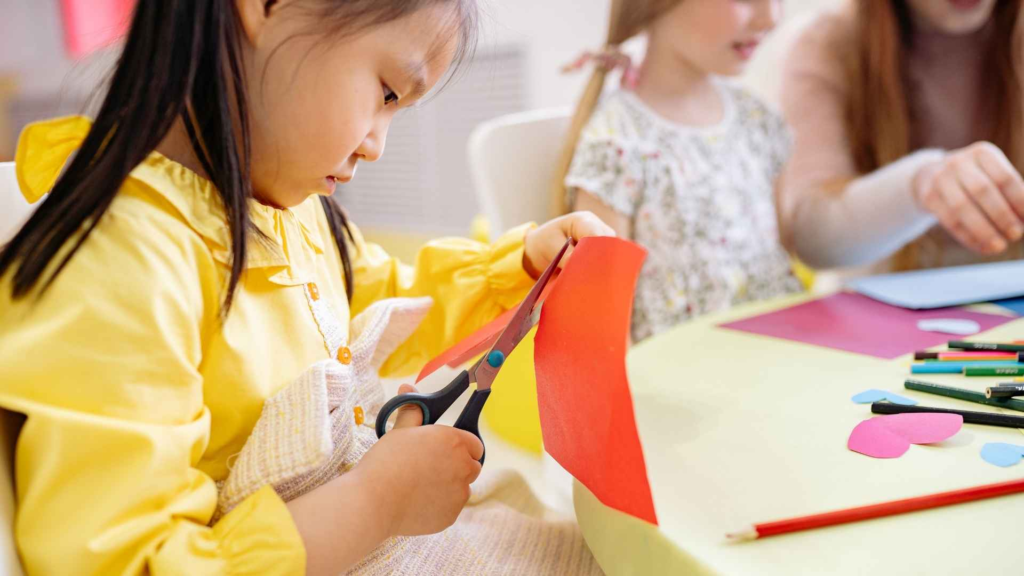
Scaffold for different ages: toddlers (around age 2) can tear paper to develop bilateral coordination, while 4-year-olds can practice cutting simple shapes with safety scissors-each at the right fit for their development.
Summer-Themed Nature & Ocean Crafts (No Backyard Required)
These activities bring nature and the beach indoors for families who are unable to get outside every day during a St. Louis summer.
- Coffee Filter Jellyfish. Paint or dot-mark coffee filters, let them dry, then add yarn or ribbon tentacles. You can also try coffee filter butterflies, which involve coloring with washable markers and misting with water for a beautiful tie-dye effect. Both spark conversations about ocean animals and habitats.
- Painted Rock Fish Bowl. Children can paint rocks as a creative indoor activity-use smooth stones for “fish,” a blue construction paper background, and white crayon “bubbles” to build a simple aquarium scene. This exploration of color, texture, and underwater life supports language acquisition through art and nature.
- Paper Plate Sun & Clouds. Use yellow paint, cotton balls, and simple vocabulary-sunny, cloudy, hot, shade-to build language skills and discuss weather.
Kids can also make a nature journal by stapling paper together and drawing what they discover about seasons. Nature leaf rubbings reveal leaf shapes and veins, and children can build paper animals to create their own zoo. Each project helps teachers and parents trigger curiosity about the natural world in a play-based way.
Indoor Bubble, Wind, and Weather Crafts with a Science Twist
Blending science and arts lets preschoolers safely explore summer concepts like wind and bubbles without stepping into the heat.
Paper Pinwheel. Use cardstock, a straw, and a push pin (with adult help) to create a mini windmill. Blow on it and ask: “What makes it spin?” This is early science inquiry-predicting, observing, describing. A meta-analysis of preschool science interventions found that classroom-based science programs produce stronger science achievement and positive impacts on literacy.
Bubble Art. Blow colored bubble solution through straws onto paper with close supervision. The unpredictable patterns let kids explore color mixing and cause-and-effect.
Rain in a Jar Painting. Paint vertical “raindrops” on clear plastic sheets taped to a window. Watching light pass through the color encourages new vocabulary-drip, pour, transparent. Teachers at Mary Margaret use crafts like these to introduce early science inquiry across ages, asking questions and helping children read the results of their experiments.
Mess-Friendly Paint, Collage & Sensory Projects for Preschoolers
Low-mess crafts often use basic household items like paper and washable paint. Cover surfaces with a plastic tablecloth, pull out old T-shirts as smocks, and you’re set. Parents should supervise closely and use age-appropriate washable materials for preschoolers to protect clothing and furniture.
- Sponge-Painted Popsicles. Clip sponges to clothespins, dip in paint, and stamp popsicle shapes on cardstock. Fun indoor summer crafts for preschoolers include puffy paint ice cream cones and sponge-painted flowers-both build fine motor strength through grip and pressing.
- Summer Sky in a Bag. Seal blue and white paint inside a zip-top bag, tape it to the table, and let babies and toddlers squish and swirl without any mess. This sensory activity supports self-regulation and focus.
- Beach in a Bin. Fill a shallow container with dry cornmeal or kinetic sand, add shells and small cups, and let children scoop, pour, and pretend they’re at the shore.
Each project connects to whole child development: motor control, sensory regulation, color vocabulary, and sharing space with others-skills that matter for life beyond the craft table.
Structured Learning Through Craft Stations at Home
Turning a kitchen table into a mini learning center is easier than you think. Research shows that a structured-balanced daily routine-versus unstructured free-choice only-is linked with higher vocabulary scores and more teacher scaffolding in preschool settings.
- Art & Writing Station. Stock crayons, blank cards, and stickers. Kids can create cards for grandparents using paper and markers-an attentive morning activity that builds narrative skills and emotional connection.
- Math & Building Station. Offer paper shapes, dot stickers, or large beads for sorting by color or size and creating repeating patterns. Popsicle stick crafts can involve gluing sticks together to make various structures, reinforcing spatial reasoning and cognitive development.
- Fine Motor Station. Set out hole punchers, child-safe scissors, and yarn for threading paper “bracelets” or summer-themed lacing cards.
Rotate stations every 15–20 minutes to keep engagement high and mimic the structured learning approach used in classrooms like Mary Margaret’s. This collection of short, dedicated sessions keeps kids focused without overwhelming their attention span.
Beyond crafts, baking cookies together fosters independence in children, and reading one chapter a day enriches children’s lives-weave these into your daily routines alongside art for a full morning of growth.
A quick note for parents searching online for craft resources: you may occasionally encounter a security service or Cloudflare Ray ID found at the bottom of a blocked page. This can be performed triggered by several actions-submitting a certain word or phrase, a SQL command, or malformed data. If you’re blocked from a site, the site owner can resolve the issue, or try clearing your IP cache. Don’t let a security solution or online attacks on websites stop your exploration-a Cloudflare Ray I or similar security notice simply means the page is using a protection service.
Social, Emotional, and Imaginative Play Crafts
Long summer days indoors can test anyone’s patience-especially a nervous three-year-old adjusting to new routines. Crafts that help preschoolers express feelings and practice sharing are a wonderful way to develop emotional vocabulary.
- Emotion Suns. Draw sun faces showing different feelings-happy, tired, frustrated about the heat. Use these to start warm conversations about self-regulation. Whether it’s your daughter or son, naming emotions builds confidence.
- Summer Story Puppets. Paper bag or craft stick puppets let kids act out trips to the park, family barbecues, or pool days-building narrative skills and imaginative play.
- Friendship Flower. Each petal represents a kind action: sharing toys, taking turns, using gentle hands. This reinforces social skills in a nurturing, creative way.
Arts-infused programs in Head Start preschools show statistically significant impacts on kindergarten readiness, including social-emotional regulation and literacy. These aren’t just crafts-they’re tools for the community of learners in your home or classroom.
Is Mary Margaret Daycare and Learning Center the Right Fit for Your Family?
Since 1988, Mary Margaret Daycare and Learning Center has been dedicated to fostering education while building self-esteem across nine St. Louis locations, serving children from six weeks to twelve years old.
Our summer programs blend indoor crafts like those above with outdoor play and field trips-balancing fun with education all summer long. Classrooms are organized into learning centers covering art, dramatic play, blocks, and literacy, so children experience structured learning through hands-on activities every week.
Our approach supports the whole child: nurturing care, creative learning, and structured growth for social, emotional, physical, and academic development.
Ready to see it in person? Explore our programs and schedule a tour to discover how our summer craft and learning environments support your child’s growth.
FAQ: Indoor Summer Crafts and Preschool Learning
How many indoor crafts should a preschooler do in a day during summer?
One to two short craft times of 10–20 minutes each are usually enough for children ages 3–5. Balance these with free play, movement, and quiet time. In quality programs like Mary Margaret, crafts are part of a daily routine alongside circle time, outdoor play, and rest so children don’t feel overwhelmed.
What if my child doesn’t like crafts or won’t sit still?
It’s completely normal for some preschoolers to prefer active play. Try sensory-based or movement-connected crafts-large floor murals, standing easel painting, or squishing paint bags. Our teachers adjust activities to each child’s interests and energy level so that structured learning still feels playful and engaging.
Can indoor crafts really support school readiness?
Yes. Cutting, gluing, drawing, and following simple steps build fine motor skills, attention span, language, and early math concepts-all important for kindergarten readiness. When crafts are intentional, they prepare the whole child, not just “art skills,” fitting into a broader learning plan like the one used at Mary Margaret.
What basic supplies should I keep on hand for summer crafts at home?
Keep these in a labeled bin or caddy:
- Washable markers and crayons
- Glue sticks and child-safe scissors
- Construction paper and paper plates
- Coffee filters, tape, and stickers
- Plastic tablecloth or old sheet
This setup mirrors the organized art center children would see in a learning center classroom.
How do I know if a daycare’s craft activities are a good match for my child?
During a tour, look for child-sized art areas, displayed work at children’s eye level, and teachers who can explain what skills each activity supports. Visit any Mary Margaret location in the St. Louis Metropolitan area, ask about our indoor summer craft plans, and see how we tailor activities to find the right fit for each child.