
Choosing a daycare is one of the biggest early decisions families make. The right questions help you compare each child care center clearly, understand what your child will experience each day, and decide whether the program fits your family’s priorities.
Key Takeaways
- Prepare a written list of questions parents should ask before enrolling in a daycare before touring any child care center.
- Ask about the daily routine, group size, and approach to early childhood education from the first conversation.
- Review health and safety procedures, staff training, background checks, and written policies before signing enrollment paperwork.
- At Mary Margaret Daycare and Learning Center, families are encouraged to ask detailed questions about infant care, pre k readiness, and whole child development during the tour.
- Clear communication about daily reports, classroom transitions, and the first few weeks helps children and parents start with confidence.
Questions To Ask First: Is This Daycare A Good Overall Fit For Our Family?
Before diving into details, ask whether the center fits your schedule, commute, and values. A beautiful classroom will not help if the hours, location, or philosophy do not work for your family.
Helpful questions include:
- What are your operating hours, holiday closures, early dismissal days, and dates around New Year’s Day, Memorial Day, Thanksgiving, and December 24–31?
- What ages do you serve? Mary Margaret Daycare and Learning Center serves children from six weeks through 12 years, including infant care, toddlers, preschool, Pre-K, school-age care, and summer programs.
- How would you describe your education philosophy: play based learning, academic, or blended?
- How does your approach support the whole child socially, emotionally, physically, and cognitively?
- What do many parents say they appreciate most about the program?
Listen for specific answers: nurturing teachers, consistent routines, strong communication, and a warm nurturing environment. The educational philosophy influences a daycare’s approach to learning, so ask how it shows up in daily routines, learning activities, and play.
Education, Training, And Staffing: Who Will Be Caring For My Child Each Day?
The quality of caregivers impacts a child’s developmental progress and emotional security. Staff stability also matters because high turnover rates can disrupt a child’s routine.
Ask:
- What education, credentials, or early childhood training do lead teachers and assistants have, such as a CDA, associate degree, or bachelor’s degree in early childhood education?
- How many years have the director and key teachers been at this facility, and what was average staff tenure over the last 3–5 years?
- How often do staff receive training in child development, safe sleep, CPR/First Aid, and social-emotional guidance?
- Do staff have CPR and First Aid certifications, and when are they renewed?
- What background checks, fingerprinting, and child abuse/neglect screenings are completed before a person works alone with children?
Background checks are essential for ensuring staff safety. Missouri requires child care staff screening, and parents can also review state guidance on child care background screening.
Families touring Mary Margaret Daycare and Learning Center can request to meet teachers in their child’s age group and ask about classroom experience, training, and how teachers support emotional needs through comforting interactions.
Health, Safety, And Security: How Will You Protect My Child Every Day?
You should leave a tour knowing how emergencies, illness, supervision, and building security are handled. Evaluating a daycare’s health policies is critical for child safety.
Ask these questions:
- What are your written policies for sick children, including fever cutoffs, vomiting, diarrhea, and return-to-school rules?
- What is the adult-to-child ratio and maximum group size for infants, younger toddlers, older toddlers, preschool, and school-age children?
- How are ratios maintained during staff breaks, bathroom breaks, and late-day transitions?
- What secure entry system is used: locked doors, keypad, key fob, staffed front desk, visitor screening, or ID checks?
- How are authorized pick-up lists checked at drop off and pick-up?
- Do you have emergency plans with documented procedures and regular drills for fire, severe Missouri weather, and evacuation?
- How are families reunified with children during an emergency?
Missouri rules require that childcare centers must maintain a 1:4 ratio for infants, and a 1:4 ratio is required for children from birth to 2 years. Missouri licensing also sets group size rules; parents can review ratio details in Missouri child care regulations.
Also ask about hygiene: children’s hands are washed before meals and after play, daycare facilities should have clear cleaning schedules for toys, and sanitation practices should include daily cleaning of toys and surfaces. Infants are always laid on their back to sleep for safety.
Parents can ask Mary Margaret Daycare and Learning Center to review licensing status, inspection reports, and Missouri Accreditation standards. Missouri Accreditation recognizes high-quality childcare programs, and Missouri Accreditation recognizes high-quality child care programs through quality standards that go beyond basic care. Licensing and inspection reports should be accessible to parents.
Program, Curriculum, And A Typical Day: What Will My Child’s Day Really Look Like?
Ask for a sample schedule for your child’s classroom. A typical day should be explained in concrete terms, not vague promises.
Ask:
- How do you balance structured learning, free play, outdoor time, rest, and meals?
- How does the schedule change from infant care to toddlers, preschool, pre k, and school-age programs?
- How do teachers support developmental progress in language, problem-solving, independence, early literacy, numeracy, and kindergarten readiness?
- What curriculum do you use, and is it aligned with Missouri early learning standards?
- Is the curriculum play-based, theme-based, or blended?
- How much outdoor time do kids receive in each season?
- What happens when St. Louis weather is too hot, cold, or rainy?
- Is screen time used? If so, is it active learning or entertainment?
Knowing the school’s curriculum helps understand their educational approach. Curriculum should support language, problem-solving, and independence skills. HighScope curriculum is used for infant and toddler development in some early learning programs, while other programs use different approved models.
Mary Margaret Daycare emphasizes whole-child development through structured learning. Children experience structured routines throughout the day, daily schedules include meals, naps, and outdoor play, and daily activities support social, emotional, and academic growth. Children engage in hands-on activities and exploration, including hands-on learning, sensory experiences, and guided interaction. Infants receive sensory play and guided interaction daily.
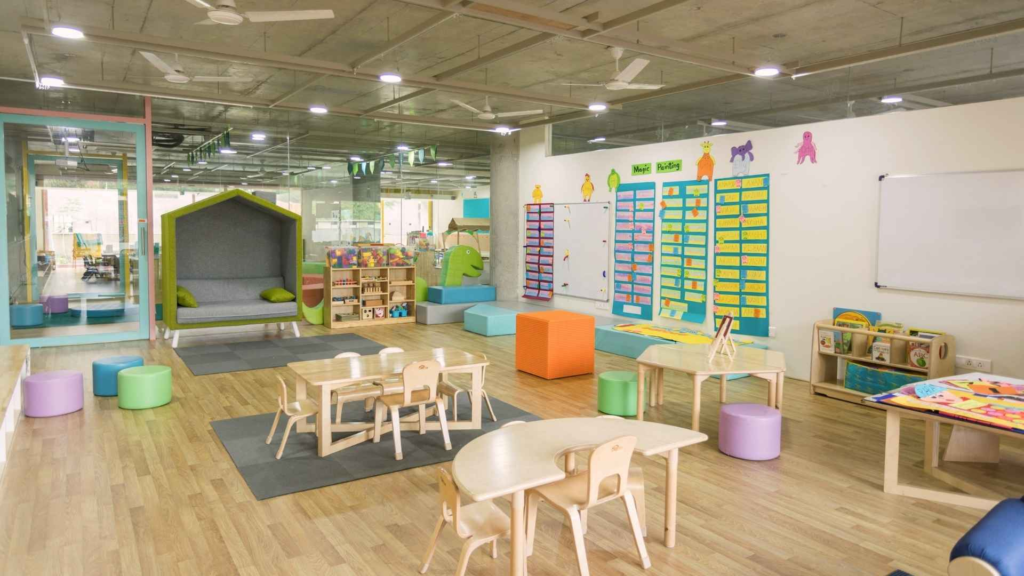
During tours, observe whether classroom setups support independence and clear play areas. Children should be observed for comfort and engagement during tours, and daycare environments should feel warm, managed, and engaging.
Daily Care, Meals, And Routines: How Will You Meet My Child’s Everyday Needs?
Consistent routines around eating, sleeping, toileting, and comfort are especially important in the first few weeks. Small daily details often make the biggest difference.
Ask:
- How is nap time handled in each classroom, including supervision, lighting, noise, and support for a child who has trouble resting?
- Are breakfast, lunch, and snacks included?
- What does a weekly menu look like?
- How are allergies and dietary restrictions managed safely?
- Can families bring breast milk, formula, or special foods from home?
- Is there a quiet space for breastfeeding during drop-off or visits?
- How do teachers support diapering, toileting, and potty training?
- Can comfort items such as blankets, pacifiers, or soft toys be used during drop off, transitions, and rest?
Ask how the program handles meals and dietary restrictions in writing, not just in conversation. Families benefit from clear financial policies and communication channels, but they also benefit from clear daily care procedures.
Parents touring Mary Margaret Daycare and Learning Center can request to see daily reports or sample communication that summarize naps, meals, diapers, learning experiences, and activities.
Communication, Relationships, And The First Few Weeks: How Will We Partner Together?
The early weeks set the tone for your child’s safety, comfort, and your relationship with the center. Clear communication helps parents feel informed and helps teachers respond in a timely manner.
Ask:
- How do teachers ease separation during the first few weeks?
- How do teachers comfort children at morning drop off?
- Do families receive daily reports, and are they delivered by paper, email, app, face-to-face chats, or another method?
- What details are included about meals, naps, behavior, learning, and routines?
- How often do teachers schedule conferences or check-ins about developmental progress?
- How does the program respect family values, culture, language, and parenting style?
- How are disagreements about behavior guidance handled?
- How can parents reach the classroom or director during the day?
Teachers provide daily updates on children’s activities at Mary Margaret, and daily communication methods may include digital apps and face-to-face chats. Communication with parents is essential for daily engagement.
Also ask about behavior. Positive behavior guidance prioritizes age-appropriate conflict resolution, social skills, self esteem, and emotional growth. Teachers help children feel comfortable during transitions, and teachers support emotional needs through comforting interactions.
Mary Margaret Daycare and Learning Center encourages two-way communication so families can talk, listen, communicate concerns, and feel comfortable raising questions as their child grows.
Classroom Transitions, Ages, And Group Size: What Happens As My Child Grows?
Children eventually move from an infant room to toddler, preschool, and Pre-K classrooms. Ask how classroom transitions happen before that moment arrives.
Ask:
- Are classroom transitions based on age, developmental readiness, or both?
- How far in advance are families notified?
- Can parents and children visit the new classroom together?
- What is the typical group size in each classroom?
- How many consistent adults will my child see each day?
- Are small peer groups moved together to preserve friendships?
- Can a child have a slower transition plan?
Ask about staff-to-child ratios for your child’s age group, not only the legal minimum. Confirm how teachers support children’s emotional needs during transitions. At Mary Margaret Daycare and Learning Center, parents can discuss a transition timeline tailored to their child’s temperament, comfort, and growth.
Policies, Tuition, And Enrollment Details: What Will We Commit To In Writing?
Before paying non-refundable registration fees or a deposit, review every document. Written policies prevent surprises.
Ask for a handbook or enrollment packet covering:
- Discipline and behavior guidance
- Tuition rates by age
- Payment schedules and late pick-up fees
- Holidays and inclement weather closures
- What tuition includes, such as meals, diapers, field trips, or supplies
- What costs extra
- Waitlist rules and enrollment form deadlines
- Notice requirements for withdrawal, schedule changes, or vacation credits
- Whether tuition is due when the center closes for major holidays
- Licensing, inspection, and accreditation reports
Ask whether the program is licensed, regularly inspected, and Missouri Accredited. The Missouri Department of Elementary and Secondary Education explains the child care inspection process, including fire, sanitation, and compliance monitoring.
Mary Margaret Daycare and Learning Center provides families with clear written policies and encourages questions about any part of the enrollment agreement.
Why Families In The St. Louis Area Choose Mary Margaret Daycare And Learning Center
For families seeking nurturing, accredited child care in the St. Louis metropolitan area, Mary Margaret Daycare and Learning Center is a local option with a long history.
Families choose Mary Margaret because:
- Mary Margaret Daycare and Learning Center has served families since 1988, with multiple locations near major neighborhoods and commuting routes.
- Programs support the whole child from six weeks through 12 years, including infant care, toddler classrooms, preschool, Pre-K, before- and after-school care, and summer programs with field trips.
- Centers emphasize safe, structured routines paired with creative, hands-on learning to build curiosity, confidence, self esteem, and school readiness.
- Families can ask how Mary Margaret’s Missouri Accreditation and quality standards translate into daily practices in classrooms, playgrounds, and communication.
- Parents can bring this list of helpful questions to a tour and use it as a guide.
Evaluating firsthand experiences from other parents can provide insights, so ask about testimonials, referrals, and what current families often mention about their daughter or son’s experience.
To explore the difference Mary Margaret may offer your child, schedule a tour at the nearest center and bring your question list.
FAQ: Common Parent Questions About Choosing And Starting Daycare
When should I start looking for daycare and joining waitlists?
In the St. Louis area, many families start touring during the second or third trimester for infant care, or 6–9 months before they need preschool or Pre-K placement. Ask each center how far in advance infant, toddler, and Pre-K classrooms usually fill. Mary Margaret Daycare and Learning Center can share current availability by age and help families plan realistic start dates.
How long does it usually take for a child to adjust to a new daycare?
Many children need 2–4 weeks to settle into new routines, though some adjust in a few days and others need longer depending on age and temperament. Ask teachers what adjustment usually looks like and what they do when children are tearful at drop-off. Consistent routines, brief goodbyes, and clear communication between home and school usually make the first few weeks smoother.
What is the difference between daycare, preschool, and Pre-K programs?
Daycare is a broad term for child care that may include full-day or part-day care. Preschool and Pre-K usually describe structured early learning programs for children around ages 3–5. Quality programs, like those at Mary Margaret Daycare and Learning Center, blend care, education, play, and learning activities to support social, emotional, and academic growth.
How can I tell if my child is making good developmental progress in daycare?
Look for teachers who observe children regularly and share notes through conferences, written summaries, daily reports, or quick conversations. Ask how teachers track language, motor skills, problem-solving, social interaction, and independence. Parents should feel comfortable asking for specific examples of their child’s strengths and emerging skills.
What should I bring on my child’s first day at daycare?
Bring labeled extra clothes, diapers or pull-ups if needed, wipes, approved comfort items, a small blanket for rest, medical forms, and any medications with written instructions. Ask the center for a classroom-specific checklist because infant rooms, toddler rooms, and Pre-K classrooms have different needs. Being prepared helps the first day feel calmer for children, families, and teachers.