
Winter in St. Louis means bundled-up mornings, shorter days, and a steady parade of sniffles through every classroom and living room in the metro area. If you have a child in group care, you already know the pattern: one runny nose turns into a household event within days. The good news is that a handful of consistent, practical habits at home and in your childcare center can dramatically cut the number of sick days your family faces from November through March.
Key Takeaways
- Winter germs spread more easily indoors and in group settings like childcare centers, but simple daily steps at home and school can greatly reduce illness.
- Washing your hands with soap for 20 seconds, practicing good hygiene when coughing and sneezing, and staying home when sick are the fastest, most effective ways to protect your family.
- Supporting your child’s immune system with adequate sleep, a healthy diet, and daily movement helps them fight winter colds, flu, and other infections.
- Mary Margaret Childcare Centers follow strict cleaning, handwashing, and illness policies to help keep children healthy across our nine St. Louis-area locations.
- Parents can partner with their childcare center through consistent routines, open communication about illness, and keeping sick children home to reduce outbreaks.
Why Winter Germs Hit Families So Hard
A typical St. Louis winter brings cold temperatures from November well into March, and with them comes cold and flu season in full force. RSV peaks, stomach bugs circulate, and childcare centers and schools become hotbeds for every virus making the rounds.
Why does this happen? Colder temperatures increase indoor crowding, raising illness exposure for everyone in the household. Windows stay sealed, heating systems run constantly, and indoor air dries out-often dropping below 35 percent relative humidity. Viruses spread more easily in dry air, and research from day-care nurseries confirms that low indoor humidity correlates with higher rates of acute respiratory infection among both children and staff.
The main germs parents hear about during winter months include common cold viruses (rhinoviruses), influenza, RSV, norovirus (the dreaded stomach bug), and childcare staples like pink eye, hand, foot, and mouth disease, and strep throat. Respiratory viruses spread more in enclosed spaces during winter, which is why group care settings see wave after wave of illness.
The reassuring truth: you cannot avoid every germ, but small daily habits at home and in child care dramatically lower the risk of serious illness and constant sick days.
How Germs Spread in Homes and Childcare Centers
Understanding how germs actually move from person to person helps parents and teachers focus on what really works instead of worrying about low-risk activities.
Respiratory germs travel primarily through tiny droplets and aerosols released when an infected person coughs, sneezes, shouts, or sings in close contact. These particles can linger in poorly ventilated indoor air and be inhaled by anyone nearby.
Surface (fomite) transmission happens when droplets land on high-touch objects-toys, door handles, light switches, tablet screens, shared art supplies-and then someone touches those surfaces before touching their eyes, nose, or mouth. Germs can survive on surfaces for 20 minutes to 2 hours depending on the pathogen and conditions, giving them plenty of opportunity to hitch a ride.
Gastrointestinal germs like norovirus and rotavirus spread through contact with stool or vomit during diaper changes and potty accidents, through contaminated hands, or via shared food and utensils.
Childcare centers, preschool classrooms, and after-school programs need especially strong hygiene routines because children share space, materials, and air all day long. Research from North Carolina found that high-touch surfaces in childcare centers harbor bacteria dominated by skin- and fecal-associated genera, reinforcing why targeted cleaning matters so much in these environments.
Cold Temperatures, Dry Air, and Your Child’s Immune System
Cold temperatures don’t directly “cause” illness, but cold air can weaken the immune system’s first lines of defense and create conditions that are friendlier for viruses. Most of the damage happens indoors, not outside.
Dry winter air in Missouri dries out the nose and throat, impairing the mucociliary clearance that normally traps and flushes out pathogens. When those mucous membranes crack, germs take hold more easily. A study in Minnesota preschool classrooms showed that raising indoor relative humidity to 40–50 percent roughly halved the detection of influenza A in both air and on surfaces compared to low-humidity rooms.
Practical steps to protect your child:
- Use a humidifier to combat dry air in winter and maintain indoor humidity between 40 and 60 percent to prevent nasal irritation. Keep the unit clean to avoid mold growth, and talk with your healthcare provider if your child has asthma or other health issues.
- Improve indoor airflow by opening windows briefly on milder days or using air purifiers with HEPA filters, which help reduce airborne particles.
- Keep your child’s nose and lips moisturized with saline spray and a gentle balm.
- Make sure children drink plenty of water throughout the day, since heated indoor air increases fluid loss.
- Dress appropriately to protect your skin in cold weather-layers, hats, and gloves when heading outdoors.
Everyday Habits That Strengthen Your Child’s Immune System
No supplement replaces the basics: sleep, nutrition, movement, and emotional well-being. These are the pillars that keep the immune system ready to fight winter germs.
Sleep
Sleep is foundational. The American Academy of Sleep Medicine recommends:
| Age Group | Recommended Sleep (per 24 hrs) |
| Infants 4–12 months | 12–16 hours (including naps) |
| Toddlers 1–2 years | 11–14 hours (including naps) |
| Preschoolers 3–5 years | 10–13 hours (including naps) |
| School-age 6–12 years | 9–12 hours per night |
For adults, getting 7 to 9 hours of sleep each night supports immunity as well-parents count too. Yet CDC data shows nearly 35 percent of U.S. children aged 4 months to 17 years sleep less than recommended, with higher rates in lower-income families. Keep bedtimes consistent, even during holiday breaks.
Nutrition
Eat a balanced diet rich in vitamins to support a healthy immune system. Focus on colorful fruits and vegetables, lean proteins, whole grains, and water instead of sugary drinks. Regular meals keep energy and blood sugar stable, which matters for both children and adults during flu season.
Movement
Physical activity supports metabolism, heart health, and overall immune response. Even 30 minutes of active play daily-indoors or out-makes a measurable difference. We’ll cover winter-specific activity ideas in a later section.
What to limit
Secondhand smoke damages airway cilia and increases susceptibility to respiratory infection. Excessive screen time can disrupt sleep schedules and crowd out physical activity. Small, realistic changes in these areas pay big dividends for your child’s health.
Handwashing: Your First Line of Defense
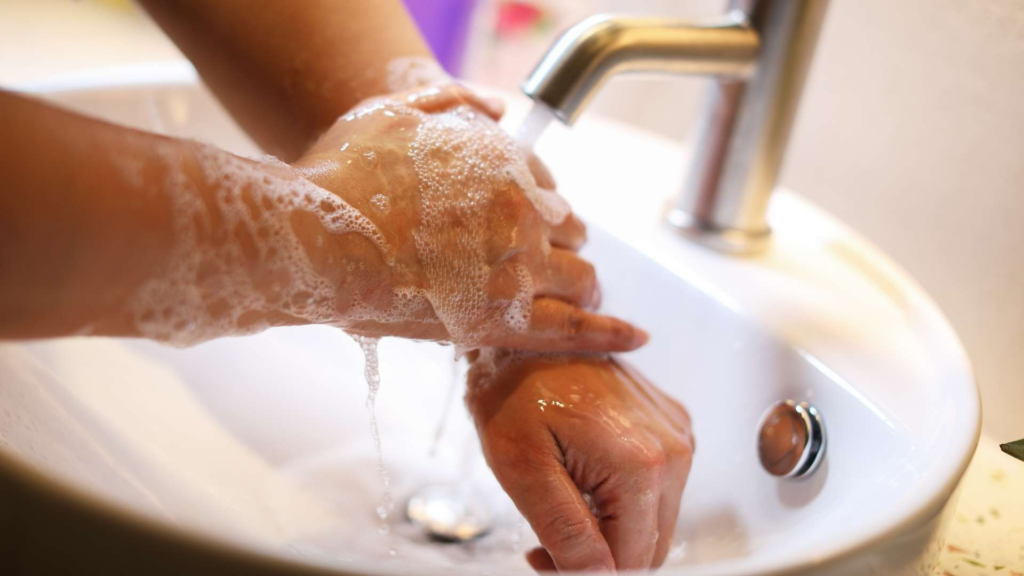
Frequent hand washing is the most important germ prevention method available to any family-and it costs almost nothing. This single habit protects against respiratory illnesses, stomach viruses, and other germs all at once.
When to wash your hands (and teach children to do the same):
- After bathroom use or diaper changes
- Before eating or handling food
- After blowing noses, coughing, or sneezing
- After playground or outdoor play
- When arriving home from school or childcare
The correct technique:
- Wet hands with clean running water.
- Apply soap. Soap breaks virus particles by disrupting their lipid envelopes, which is why it works so well.
- Scrub every surface-between fingers, backs of hands, under nails-for at least 20 seconds. Singing “Happy Birthday” twice is about the right length.
- Rinse thoroughly.
- Dry with a clean towel.
Washing hands for 20 seconds reduces germ spread significantly, and it’s the cornerstone of every health protocol in quality childcare centers.
When hand sanitizer makes sense: Alcohol-based hand sanitizers with at least 60 percent alcohol can be used when soap and water aren’t available-on field trips, in the car, or at the park. However, soap and water are always better when hands are visibly dirty, and hand sanitizer is less effective against some pathogens like norovirus.
At Mary Margaret Childcare Centers, hand washing is built into classroom routines throughout the day-arrival, before and after meals, after outdoor play, and after rest time-so children develop the habit without thinking twice.
Good Hygiene for Coughs, Sneezes, and Runny Noses
Teaching “respiratory manners” early helps protect classmates, teachers, siblings, grandparents, and every other person your child interacts with during winter.
Cover coughs and sneezes with a tissue or inner elbow to prevent spreading droplets. Here’s the routine to practice good hygiene every time:
- Grab a tissue, cover your mouth and nose completely.
- Sneeze or cough into the tissue.
- Throw the tissue away immediately.
- Wash hands right after.
When no tissue is handy, cough or sneeze into the bend of your elbow-not your bare hands. Hands touch everything; elbows don’t open doors or pick up crayons.
Keep small tissue packs and a travel-size hand sanitizer in backpacks, car seats, and diaper bags during the winter months so supplies are always within reach. At Mary Margaret, teachers routinely remind children how to cover coughs and manage runny noses as part of daily good hygiene habits, using songs and modeling to reinforce the behavior.
Cleaning and Disinfecting High-Touch Surfaces
Frequent cleaning of high-touch surfaces helps break the chain of infection without needing to sanitize every object in sight. Since germs can survive on surfaces for 20 minutes to 2 hours, regular wipe-downs make a real difference.
Priority surfaces at home and in childcare centers:
- Doorknobs and cabinet handles
- Light switches
- Faucet handles and bathroom fixtures
- Tabletops and counters
- Shared toys, tablets, keyboards, and game controllers
- Classroom supplies and cubbies
Cleaning vs. disinfecting: Cleaning removes dirt and lowers the germ count. Disinfecting kills or inactivates pathogens on surfaces. For best results, clean first, then disinfect using EPA-registered products according to label directions-including the required contact time (how long the surface must stay wet).
Realistic routines: Daily wipe-downs of dining and play surfaces are usually sufficient. During peak flu weeks-typically December through February in the St. Louis region-increase frequency for the highest-touch items. Disinfect high-touch surfaces regularly to prevent germ spread, but don’t exhaust yourself trying to sterilize every corner of the house.
Mary Margaret Childcare Centers follow CDC cleaning and disinfecting guidelines for early care settings, maintaining regular schedules for classrooms, restrooms, and shared equipment to help keep germs away.
What Works (and What Doesn’t) for Germ Prevention
Parents hear many conflicting tips during cold and flu season. Here’s what actually matters, and what you can safely skip.
Effective preventive actions:
- Wash your hands often and teach children to do the same
- Practice good hygiene when coughing and sneezing
- Stay up to date on seasonal vaccinations for flu and COVID-19-get that flu shot
- Clean and disinfect shared surfaces regularly
- Stay home when sick to avoid spreading illness to others
- Avoid close contact with sick individuals to reduce infection risk
- Wear a well-fitting mask in crowded indoor spaces during peak viral seasons-face masks reduce virus transmission in crowded indoor settings, especially those where you can’t maintain distance
- Use a humidifier to reduce virus transmission in dry air
What families don’t need to worry about:
- Washing grocery packaging or outer bags
- Spraying every outdoor item with disinfectant
- Changing clothes every time a child comes inside from the playground
- Removing shoes at the door helps with dirt and allergens but doesn’t meaningfully change respiratory virus risk
Most people will protect their families far more effectively by focusing on core habits-handwashing, covering coughs, sleep, and nutrition-than by pursuing elaborate cleaning rituals.
When Your Child Should Stay Home From Childcare
Missing a day of work is hard. But keeping sick children home prevents bigger outbreaks at the childcare center and protects classmates, staff, and family members across the community.
Your child should stay home if they have:
- A fever of 100.4°F (38°C) or higher in the past 24 hours
- Vomiting or diarrhea
- A severe or persistent cough
- Difficulty breathing
- An unexplained rash
- Red, draining eyes (possible pink eye)
- A diagnosis of a contagious disease like strep throat or influenza
Children should be fever-free for at least 24 hours without fever-reducing medicine before returning to group care. Stay home when sick-this single step prevents the spread of germs to patients, teachers, and other children who may be at higher risk.
If you’re unsure whether symptoms are borderline, call your pediatrician or nurse line. This is especially those situations involving infants under six months or children with chronic health issues. Mary Margaret Childcare Centers follow clear illness policies designed to protect both the sick child and healthy classmates and staff.
How Childcare Centers Help Keep Germs Away
High-quality childcare centers are built around routines that support safety, health, and learning-even during heavy cold and flu season. These aren’t afterthoughts; they’re woven into every part of the day.
Standard infection-control practices include strict handwashing schedules, safe diapering and toileting routines with gloves and sanitized changing tables, toy sanitizing rotations, and prompt cleanup of spills and bodily fluids. Staff receive training on recognizing illness symptoms, using proper disposal methods, and following state licensing health regulations.
Consistent routines reduce outbreaks: arrival health checks, handwashing before meals and after outdoor play, labeled personal items, and clear pick-up policies for sick children all work together. Across our nine St. Louis-area locations, Mary Margaret Childcare Centers combine nurturing care with strong hygiene practices so children can focus on learning and play rather than passing viruses back and forth.
Partnering With Your Childcare Center as a Parent
Strong parent-center communication is one of the most powerful tools for preventing and managing illness in group care settings. You and your child’s teachers are on the same team.
How to be an active partner:
- Share up-to-date emergency contacts, allergy information, and any chronic health issues so staff can respond quickly if your child becomes ill.
- Review the center’s illness, medication, and exclusion policies each fall and ask how classrooms handle outbreaks of flu, RSV, or stomach viruses.
- Use consistent language at home that matches what teachers use about hand washing, cough etiquette, and avoiding touching your eyes, nose, and mouth.
- Communicate openly when your child is sick at home so the center can watch for symptoms in other children.
Families in the St. Louis area are welcome to schedule a tour of a Mary Margaret Childcare Center to see health and safety routines in action and learn more about our programs.
Keeping Germs Away at Home With Young Children
Winter creates several “hot spots” at home where germs accumulate: kitchen counters, bathroom sinks, shared tablets, game controllers, and favorite stuffed animals that travel from floor to mouth to bed.
Simple family rules that work:
- Wash hands as soon as everyone walks in the door, before snacks, and after blowing noses or using the bathroom
- Avoid touching your eyes, nose, and mouth-especially after handling shared objects
- Create a small “wellness station” with tissues, a trash can, hand sanitizer (stored out of reach of toddlers), and a thermometer so sick-day supplies are easy to find
- Regularly wash bedding, frequently used blankets, and soft toys in warm water, especially after a child has been sick
Encourage older siblings to model good hygiene for younger brothers and sisters. Turn handwashing into a quick game or challenge-who can scrub for a full 20 seconds without peeking at the clock? Keeping it positive makes habits stick.
Special Considerations for Infants and Toddlers
Babies and toddlers have developing immune systems and explore the world with their hands and mouth, making good hygiene especially important for this age group.
In infant rooms, extra precautions matter:
- Strict diapering procedures with gloves, hand washing between each child, and sanitizing changing tables after every use
- Separate crib bedding for each child, washed frequently
- Pacifiers, bottles, and sippy cups should never be shared and must be labeled clearly with each child’s name
Parents should keep up with well-child visits and recommended vaccinations during the winter months, especially for babies entering group care for the first time. Getting vaccinated on schedule protects not just your child but every infant in the room who may be too young for certain vaccines.
Mary Margaret’s infant and toddler programs follow age-appropriate health and safety standards while providing nurturing, responsive care that supports whole-child development from six weeks on.
Helping Older Children Build Lifelong Hygiene Habits
The early elementary years are ideal for teaching children to manage their own good hygiene with less prompting from adults.
Age-appropriate responsibilities to practice:
- Remembering to wash hands regularly without reminders
- Covering coughs and sneezes independently
- Packing their own tissues for school
- Helping wipe down shared devices after use
Explain the “why” behind rules using child-friendly language. Tell them the immune system works like a superhero team that needs the right tools-sleep, food, clean hands-to fight germs and keep them healthy. Use charts, stickers, or simple rewards to reinforce habits like hand washing after using the bathroom and before eating.
Skills learned at home carry directly into the classroom and childcare center, protecting friends and teachers along the way.
Staying Active and Getting Fresh Air in Winter
It’s a myth that simply being in the cold makes children sick. Outdoor time actually supports strong bodies and helps the immune system stay active.
Encourage families to stay active with daily movement, even on cold days:
- Bundled-up walks, playground visits, or backyard games with time limits based on temperature and wind chill
- Spending time outdoors can reduce the germ build-up that happens in crowded indoor spaces like malls, movie theaters, and indoor play areas
On icy or extremely cold days, bring the action inside:
- Dance parties and kid-friendly yoga
- Pillow obstacle courses and hallway relay races
- Active video games (in moderation)
Physical activity supports metabolism, heart health, and overall immune response-benefits that matter year-round but pay off most during flu season. Mary Margaret Childcare Centers build physical activity into every day, indoors and outdoors, to help children stay healthy through all seasons.
Mental Health, Stress, and Winter Wellness
Emotional well-being influences the immune system more than many cultures and families realize. Winter schedules, holiday disruptions, and repeated illness can be stressful for both children and adults.
Regular routines for meals, sleep, and play serve as anchors that help children feel secure even when illness or weather changes plans. Simple calming practices families can try together:
- Reading before bed
- Deep-breathing games (“smell the flower, blow out the candle”)
- Quiet time with music or drawing on dark winter evenings
Watch for signs of stress in children-clinginess, tantrums, changes in sleep or appetite-and talk with a pediatrician or counselor if concerns persist. Taking care of mental health is not a luxury; it’s part of staying healthy through winter.
Nurturing care and predictable routines in childcare settings, like those at Mary Margaret, support both emotional and physical health every day.
How Mary Margaret Childcare Centers Support Healthy Winters
Since 1988, Mary Margaret Daycare and Learning Center has balanced fun, education, and safety for children from six weeks to twelve years old across nine locations in the St. Louis Metropolitan area. Winter health is built into everything we do.
Our winter health measures include:
- Reinforced handwashing routines woven into every transition of the day
- Toy and surface sanitizing schedules that increase during peak cold and flu season
- Clear, written policies on when children and staff should stay home
- Staff training on recognizing symptoms, safe food preparation, and proper cleaning
Our programs for infants, toddlers, preschoolers, and school-age children support the whole child-social, emotional, physical, and academic-while keeping good hygiene and safety at the center of daily routines. Before- and after-school care and fun-filled summer programs provide consistent environments and structured growth that help children build strong health habits all year long.
We invite you to learn more about our St. Louis child care programs at marymargaretdaycare.com/programs or schedule a tour to see how we create safe, nurturing, and engaging spaces for children.
Frequently Asked Questions
How can I tell if my child is too sick to go to childcare?
Children should usually stay home if they have a fever of 100.4°F (38°C) or higher, vomiting, diarrhea, breathing problems, unusual lethargy, or a contagious rash. Check your childcare center’s written illness policy and call your pediatrician or nurse line if you’re unsure about borderline symptoms. When in doubt, keep your child home for the day-it protects everyone in the classroom.
Is it safe for my child to play outside in very cold temperatures?
Outdoor play is generally safe and healthy if children are dressed in layers, wear hats and gloves, and come inside regularly to warm up. Limit time outdoors in extreme cold or very low wind chills, and check local weather advisories for the St. Louis area. Follow pediatrician guidance for infants and children with chronic health conditions, and always watch for signs of discomfort like shivering or red, numb skin.
Do I need to disinfect everything my child touches to prevent winter illnesses?
No. Focusing on high-touch surfaces-bathroom fixtures, tables, light switches, toys, devices-is enough. Daily or regular cleaning matters more than constant deep disinfection of every object. Washing hands regularly, practicing good hygiene, and keeping sick children home have a far bigger impact on the spread of germs than trying to sanitize every item in sight.
What can I ask my childcare center about their winter health practices?
Ask how often children wash their hands, how toys and sleeping areas are cleaned, what the illness and exclusion policies are, and how the center communicates about outbreaks of flu or other infections. Families touring a Mary Margaret Childcare Center can observe these health and safety routines firsthand and discuss any individual health needs their child may have. You can also ask about ventilation, the workplace wellness policies for staff, and how treatment for minor issues like runny noses is handled throughout the day.
Should my child get a flu shot if they attend a childcare center?
The CDC and most pediatricians recommend an annual flu vaccination for most children 6 months and older, especially those in group care where germs spread quickly among many people. The flu shot is one of the strongest preventive actions a family can take during flu season. Talk directly with your child’s healthcare provider about flu, COVID-19, and other recommended vaccines-keeping fluids up and nutrition strong alongside vaccination gives your child the best chance to stay healthy all winter.