Young children touch everything. Doorknobs, playground equipment, other kids’ hands, their own faces. They share snacks, crayons, and water bottles without a second thought. That is perfectly normal childhood behavior, and it is also one of the main reasons germs spread so quickly in schools, child care centers, and homes.
The good news is that teaching kids about germs and good hygiene does not have to be a lecture. With the right approach, it can become a natural part of daily life, something your child understands, practices, and even enjoys.
This guide walks you through how to explain germs in simple, child-friendly terms, which hygiene habits matter most, and how to make those habits stick at home and in child care.
What Are Germs? Explaining It Simply to Young Kids
Germs are tiny living things that can get into our bodies and make us feel sick. They are far too small to see without a microscope, but they are everywhere: on surfaces, in the air, and on our hands.
There are a few different types of germs, but the ones children encounter most often are bacteria and viruses. Bacteria can cause things like ear infections and strep throat. Viruses cause colds, the flu, and stomach bugs.
How Germs Spread
Kids do not need a science lesson to understand how germs travel. A simple explanation works well:
- When someone coughs or sneezes, tiny droplets carrying germs float into the air or land on surfaces.
- When you touch a surface with germs and then touch your mouth, eyes, or nose, those germs can enter your body.
- Sharing food, cups, or touching someone else’s hands can also pass germs from one person to another.
A helpful way to explain it to a toddler or preschooler: “Germs are like invisible little bugs that can hop from one person to another and make our tummies or throats feel bad. Washing our hands helps stop them from jumping on us.”
That level of explanation is enough for most young children. The goal is not to frighten them but to help them understand why certain habits matter.
Why Good Hygiene Matters for Young Children
Children in group settings like preschool, daycare, and school spend hours together every day. They play close together, share materials, and touch the same tables and toys repeatedly. That makes hygiene habits especially important, not just for one child but for the entire group.
When children practice good hygiene consistently, they are less likely to get sick, which means fewer missed school days, fewer sick days for parents, and a healthier classroom environment overall.
Beyond preventing illness, hygiene habits also teach children self-care and responsibility. A child who learns to wash their hands before eating and after using the bathroom is building a habit that will benefit them for life.
The Most Important Hygiene Habits to Teach Kids
Not every hygiene habit needs to be introduced at once. Start with the basics and add more as your child grows.
Handwashing: The Single Most Effective Habit
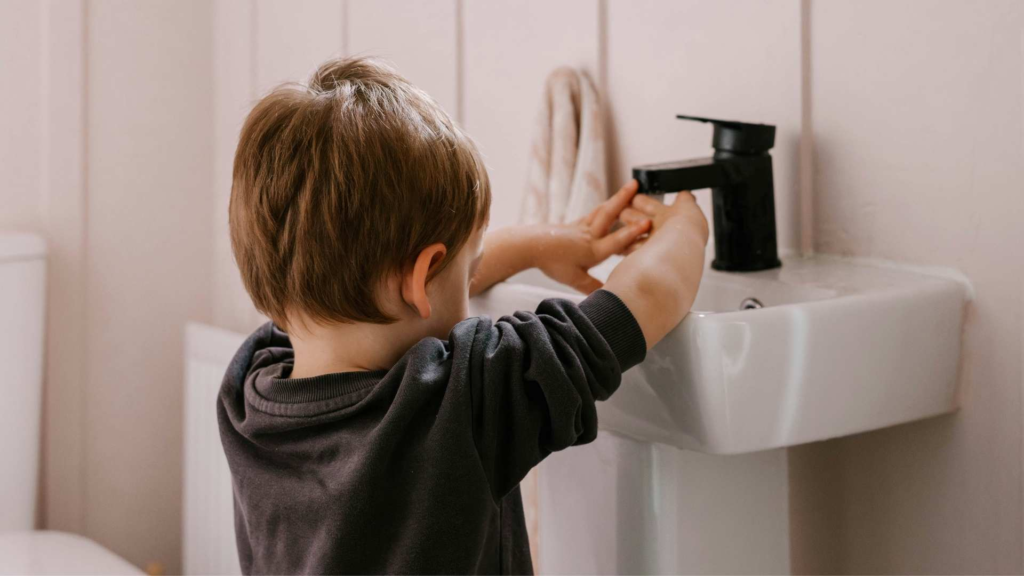
Handwashing is one of the most powerful ways to stop the spread of germs. Teaching it well is worth the effort.
Teach your child to wash their hands:
- Before eating or handling food
- After using the bathroom
- After sneezing, coughing, or blowing their nose
- After playing outside or with pets
- After touching shared surfaces like door handles or playground equipment
How to wash hands properly:
- Wet hands with clean, running water
- Apply soap
- Scrub hands for at least 20 seconds (singing “Happy Birthday” twice is a classic timer)
- Rinse thoroughly
- Dry with a clean towel or air dry
Practice this together. Turn it into a habit by doing it at the same times every day so it becomes part of the routine rather than something you have to remind your child about each time.
When soap and water are not available, hand sanitizer is a good backup for older children. Make sure they rub it in thoroughly and let it dry completely before touching anything.
Covering Coughs and Sneezes
Covering a cough or sneeze seems simple, but for young children it takes practice. Many kids instinctively cover their mouth with their hands, which then spreads germs to everything they touch next.
Teach your child to sneeze or cough into the bend of their elbow, sometimes called the “vampire sneeze” because it looks like wrapping a cape around your face. This keeps germs from spreading to hands and surfaces.
Tips for teaching it:
- Model it yourself every time you cough or sneeze
- Practice in front of a mirror so your child can see themselves doing it
- Gently correct them without shaming when they forget
- Praise them enthusiastically when they remember on their own
Avoiding Touching the Face
This one is genuinely difficult, even for adults. Most people touch their faces dozens of times per day without realizing it. For young children, the goal is simply awareness.
You can start by saying, “Try not to put your fingers in your mouth or rub your eyes when you are out playing. That is one way germs can get inside us.” Do not expect perfection, but the conversation itself is valuable.
Other Healthy Habits Worth Building
Beyond handwashing and cough etiquette, a few other habits help reduce germ spread:
- Not sharing cups, utensils, or food with other children
- Throwing used tissues away immediately instead of leaving them on surfaces
- Staying home when sick so other children are protected
- Bathing or showering regularly to keep skin clean
Reinforcing Hygiene Habits at Home
Rules and reminders only go so far. The most effective way to build hygiene habits is through repetition and routine.
Build It Into Daily Routines
Children respond well to predictability. When handwashing happens at the same moments every day, it stops being something you have to enforce and starts being something your child simply does.
Try anchoring hygiene habits to existing parts of your routine:
- Wash hands as soon as you walk in the door from school or daycare
- Wash hands before sitting down to every meal
- Brush teeth right after breakfast and before bed, without exception
The more automatic these habits become, the less resistance you will face.
Lead by Example
Children learn more from what they watch than from what they are told. When you wash your hands visibly and consistently, sneeze into your elbow, and talk openly about why these habits matter, your child picks up those patterns naturally.
You can narrate what you are doing: “I touched the grocery cart, so I am washing my hands before I start making dinner. Germs can hide on handles.” These small moments of explanation make a big difference over time.
Use Visual Reminders
For younger children especially, visual cues can help. A small poster near the bathroom sink showing the steps for handwashing gives children a reference they can check themselves. Some families use simple sticker charts for toddlers and preschoolers to celebrate consistent habits during the learning phase.
Making Hygiene Fun for Kids
Young children learn best through play, stories, and hands-on activities. Hygiene does not have to feel like a chore.
Try These Fun Approaches
The glitter germ experiment: Put a little glitter on your child’s hands and have them go about their day touching objects as normal. Then show them how far the “germs” spread. This visual demonstration is surprisingly effective for preschool and school-age children.
Sing a handwashing song: The 20-second scrub goes by much faster with a song. Let your child choose their favorite song or make one up together.
Read books about germs: Several children’s picture books explain germs and hygiene in fun, age-appropriate ways. Ask your local library or school for recommendations.
Play pretend: Set up a toy sink or doctor kit and have your child practice washing stuffed animals’ hands or teaching a doll to sneeze properly. Pretend play is one of the best ways young children process new information.
Give them ownership: Let your child pick their own soap dispenser, hand towel, or toothbrush. Small choices increase buy-in and make the routine feel personal.
How Mary Margaret Daycare and Learning Center Reinforces Hygiene
Good hygiene habits are easier to maintain when home and child care work together. At Mary Margaret Daycare and Learning Center, hygiene is built into the daily routine across all nine St. Louis metropolitan area locations.
Children wash their hands before meals, after outdoor play, and after using the bathroom. Staff model proper technique and use warm, encouraging language to reinforce habits without making children feel ashamed for forgetting.
Since 1988, Mary Margaret has balanced fun with education in safe, nurturing environments for children from six weeks to twelve years old. Our teachers understand child development and know how to introduce health concepts in ways that are age-appropriate and genuinely engaging.
We also keep families informed. If your child’s classroom is navigating a round of illness, we communicate proactively so parents can take extra precautions at home. That partnership between caregivers and families is one of the most effective ways to keep children healthy throughout the year.
Talking to Kids About Germs at Different Ages
Children understand health concepts differently depending on their age and development. Here is a simple guide to meeting them where they are:
Toddlers (ages 1–3): Keep explanations simple and focus on action. “We wash our hands because invisible germs can make us sick” is enough. Focus on building the habit before the full understanding.
Preschoolers (ages 3–5): Introduce the idea that germs are tiny living things, talk about how they spread, and explain how our habits help stop them. Use stories and play to reinforce the concept.
School-age children (ages 6–12): Children this age can handle more detail. Explain the difference between bacteria and viruses in simple terms, discuss why we do not share food or cups, and talk about what happens when germs enter the body.
A Few Final Tips for Parents
Teaching hygiene is not a single conversation. It is hundreds of small moments, reminders, corrections, and celebrations over time. Here are a few final things to keep in mind:
- Be patient. Young children forget. Gentle, consistent reminders work better than frustration.
- Stay positive. Praise specific behaviors: “Great job washing your hands all the way up to your wrists!”
- Make it normal. The more matter-of-fact you are about hygiene, the less resistance you will face.
- Connect it to care. Help children understand that hygiene is a way we take care of ourselves and look out for the people around us.
Children who build strong hygiene habits early carry those habits into school, friendships, and eventually adulthood. The foundation you build now, a few soap suds and silly songs at a time, genuinely matters.
If you are looking for a child care partner in the St. Louis area that supports your child’s health, development, and daily routines, we would love to connect. Visit Mary Margaret to learn more about our programs or schedule a tour at a location near you.