
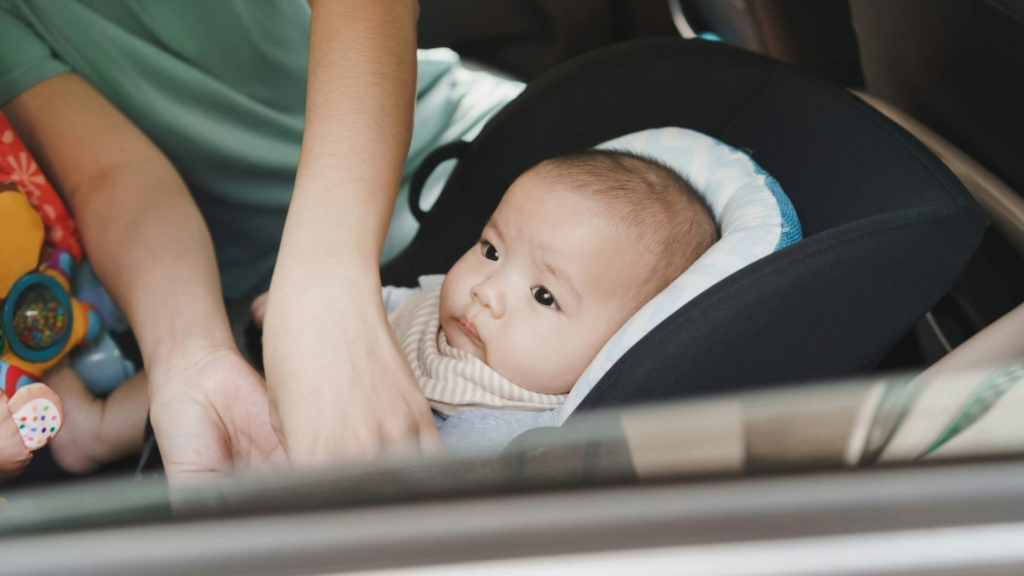
When the weather turns freezing across the St. Louis area, parents naturally want to bundle up their little ones. Puffy coats, thick scarves, heavy hats, and fleece blankets all help keep your child cozy as the temperature drops. However, what keeps them warm outside might actually put them in danger inside your vehicle.
A fluffy winter coat is not the best option for keeping your child secure in their car seat. While it feels intuitive to keep that heavy jacket on them during a chilly morning drive to daycare, doing so compromises the safety mechanisms designed to protect them.
Today, we will explore the critical intersection of car seats and winter safety. You will learn why bulky clothing poses a hidden risk, how to test your child’s coat, and practical ways to ensure your little one stays both warm and perfectly safe on the road.
Why Big Winter Coats and Car Seats Do Not Mix
The American Academy of Pediatrics issues a strong warning to parents every single winter: big coats and car seats simply do not mix. To understand why, you have to look at how a car seat functions during a collision.
A five-point harness works by transferring the massive force of a crash to the strongest parts of a child’s body. For this to work, the straps must sit firmly and snugly against their chest and shoulders. When you put a bulky winter coat on your child, you introduce a thick layer of air and fluff between their body and the safety harness.
You might pull the straps tight, and it might look like your child is secure. However, in the event of a sudden stop or a crash, the immense force immediately flattens the fluffy material of the coat. That compression creates a dangerous gap between the harness and your child. This sudden slack can cause the straps to slip off their shoulders. In severe cases, this gap leads to children being fully ejected from their car seats, resulting in devastating injuries.
Your goal is always to have the straps fastened firmly against your child’s actual body, not their outerwear.
The Simple Coat Experiment You Can Try at Home
If you are unsure whether your child’s current winter jacket is too bulky, you can perform a very simple test right in your driveway. This quick experiment clearly demonstrates just how much hidden room a winter coat creates under the harness.
Follow these simple steps:
- Put the winter coat on your child and place them in their car seat.
- Fasten the harness and tighten the straps just as you normally would for a drive. The straps should feel snug over the coat.
- Unbuckle the harness without loosening the straps at all.
- Take your child out of the seat, remove their winter coat, and place them back into the seat wearing only their regular indoor clothes.
- Buckle the harness again, but do not tighten the straps.
Now, take a close look at the space between the straps and your child’s chest. Make a note of where the buckles have shifted. Is the chest clip still at armpit level? Are the straps still completely snug against their shoulders?
If you can fit more than two fingers under the harness at their collarbone, the coat is too bulky. That extra slack is exactly how much your child would move forward during a crash. If the coat fails this test, you need to explore alternative ways to keep them warm.
Safe Alternatives to Puffy Coats in the Car
Discovering that your favorite winter coat is not safe for the car can feel frustrating, especially on a freezing St. Louis morning. Fortunately, there are several highly effective ways to keep your kiddo both warm and securely fastened.
Master the Art of Layering
The most effective way to dress your child for a winter car ride is through smart layering. Start by dressing your child in close-fitting, warm base layers. Think long-sleeved bodysuits, thermal underwear, or form-fitting fleece sweaters.
Layering traps body heat close to the skin without adding dangerous bulk. A long-sleeved shirt paired with a thin, tightly woven fleece pullover usually passes the coat test perfectly while providing excellent insulation against the cold.
The Blanket Method
For smaller children and infants, the blanket method remains a tried-and-true favorite. First, buckle your child into their car seat wearing their safe indoor layers. Once the harness is properly tightened and secure, tuck a thick, warm blanket over the top of the harness.
You can keep the blanket tucked around their sides to block out drafts. Because the blanket sits entirely outside the harness system, it never interferes with the straps. When the car warms up, you can simply pull the blanket off so your child does not overheat.
Invest in Safe Car Seat Covers
If you have an infant in a bucket-style carrier, you can look for aftermarket car seat covers designed specifically for winter travel. You must choose the right kind of cover to maintain safety.
Never use a product that requires you to route the harness straps through a thick layer of fabric behind the baby. Instead, look for “shower cap” style covers. These covers stretch entirely over the outside rim of the car seat. They keep the cold wind off your baby’s face while leaving the internal harness system completely untouched.
The Backward Coat Trick
Older toddlers and school-aged children often want to wear their coats. For larger children, you can use the backward coat trick.
Have your child take their coat off before they get into the car. Buckle them safely into their five-point harness or high-back booster seat, ensuring the straps sit perfectly tight. Once they are fully buckled, help them put their arms backward into the sleeves of their winter coat. The jacket acts like a thick, wearable blanket over their chest and arms, keeping them toasty warm without compromising the seat’s safety features.
Managing Other Winter Accessories
Coats are not the only winter gear you need to monitor. Hats, scarves, and mittens also play a role in how your child fits into their seat.
Bulky scarves can interfere with the proper placement of the chest clip, which must sit exactly at armpit level to protect your child’s sternum. Swap heavy scarves for a fitted neck gaiter if your child needs extra warmth. Make sure winter hats do not push your infant’s head forward, which can restrict their small airways. Choose thin, warm beanies that allow their head to rest flat against the back of the car seat.
Professional Car Seat Checks and Installation
Reading about car seat safety is a great first step, but having a professional verify your setup offers ultimate peace of mind. Car seat manuals are notoriously complex, and navigating winter clothing rules only adds to the confusion.
Always remember that local resources are available to help you. Most local fire departments and police stations staff certified Child Passenger Safety Technicians (CPSTs). These experts are trained to install and check car seats to ensure they sit properly in your specific vehicle. They can also watch you buckle your child in and confirm that your winter layering strategy works safely. This is a tremendous resource for parents, grandparents, and anyone else who drives with your children.
Why Safety is Our Top Priority at Mary Margaret Daycare
As you navigate the busy winter months in the St. Louis area, balancing warmth, safety, and a busy schedule requires patience. Whether you are driving across town for errands or heading to morning drop-off, securing your child properly makes all the difference.
At Mary Margaret Daycare and Learning Center, we believe that every single child is precious. Your child’s safety remains our absolute top priority, from the moment you pull into our parking lot until you pick them up at the end of the day. We know that mornings can be rushed, but taking an extra sixty seconds to remove a puffy coat before buckling up is a habit that saves lives.
We want all of our families to be incredibly safe on the road, on the way to school, or anywhere your winter travels may take you. Since 1988, our seven St. Louis child care centers have been dedicated to fostering education while building self-esteem in a highly secure environment. We offer programs for children from six weeks to twelve years old, ensuring a safe, nurturing space at every stage of development.
We perfectly balance fun with education, offering a structured environment that supports social, emotional, and academic growth. If you are looking for a trusted childcare partner that shares your deep commitment to your child’s well-being, we invite you to explore our programs. Contact us today or visit the Mary Margaret Daycare location nearest you to schedule a tour and see our secure, welcoming facilities firsthand.